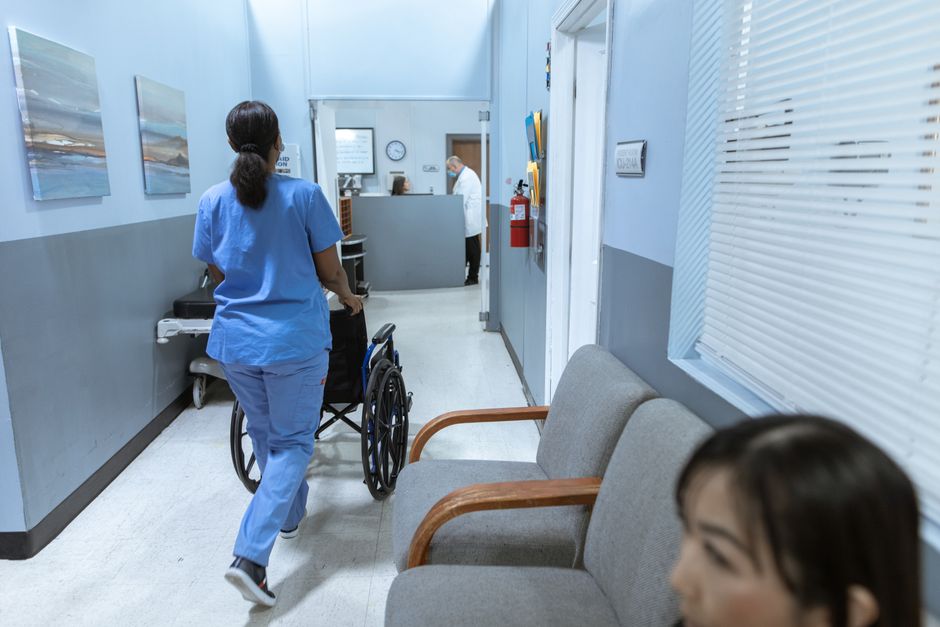
An LPN program is a state-approved practical nursing program that typically takes about one year to finish, and it is the fastest legitimate route into licensed nursing work in the United States. According to the U.S. Bureau of Labor Statistics Occupational Outlook Handbook, licensed practical and licensed vocational nurses complete a state-approved educational program that usually takes about 1 year, then pass a national licensing exam before they can work.
- What an LPN Program Actually Covers
- How Long an LPN Program Takes and What It Costs
- LPN Pay and Job Outlook, According to BLS
- How to Pay for an LPN Program with Federal Aid
- Licensing: The NCLEX-PN and Your State Board
- What Most People Get Wrong About an LPN Program
- From LPN to RN: The Bridge Path
- Frequently Asked Questions
That short timeline is the whole appeal. You are not committing four years and a bachelor’s degree before you find out whether you actually like patient care. You spend roughly two to four semesters learning nursing fundamentals, anatomy and physiology, and pharmacology, plus supervised clinical hours in real facilities, and then you sit for the NCLEX-PN.
The trade-off is real too, and nobody should hide it from you. LPNs earn less than registered nurses, the job growth rate is modest, and the scope of practice you are licensed for varies by state. This guide walks through what an LPN program includes, what it costs, how to pay for it, how licensing works, and what people commonly misunderstand before they enroll.
What an LPN Program Actually Covers
A practical nursing curriculum is narrow on purpose. BLS describes LPN program coursework as including nursing fundamentals, anatomy and physiology, and pharmacology, with all programs also requiring supervised clinical experience. You learn to check vital signs, insert catheters, dress wounds, give medications where your state allows it, and report changes in a patient’s condition to an RN or physician.
Clinical rotations are the part students underestimate. You will be assigned to nursing homes, hospitals, or clinics on a set schedule, often early mornings, and attendance is usually non-negotiable. Missing clinical hours is one of the most common reasons students fail out of an LPN program even when their exam grades are fine.
Programs are offered mostly as certificates or diplomas at community colleges and technical schools, and BLS notes that some high schools offer them as well. A few schools package practical nursing into an associate degree instead. Ask which credential you actually receive, because it affects whether credits transfer later.
How Long an LPN Program Takes and What It Costs
BLS puts the typical length at about 1 year. Part-time and evening tracks stretch that to 18 to 24 months. Cost is where honesty matters most: there is no single national tuition figure for an LPN program, because pricing is set by each school. Community college and public technical school programs are generally the least expensive option; private career schools usually cost considerably more.
Do not accept a verbal quote. Ask the school for a written breakdown covering tuition, fees, uniforms, textbooks, background check, drug screening, immunizations, liability insurance, and exam prep. Then compare that total against the same list from a nearby public college. The gap is often larger than students expect.
Licensing costs sit on top of tuition. NCSBN lists the NCLEX registration fee at $200, and NCSBN has announced the fee increases to $350 for candidates registering on or after February 1, 2027 — its first adjustment since 2000. Your state board application fee and fingerprinting charges are separate and vary by state.
LPN Pay and Job Outlook, According to BLS
Here is the wage picture in plain numbers. According to BLS, the median annual wage for licensed practical and licensed vocational nurses was $62,340 in May 2024. The lowest 10 percent earned less than $47,960 and the highest 10 percent earned more than $80,510. Median means half earned more and half earned less — it is not a starting salary.
On growth, BLS projects employment of LPNs and LVNs to grow 3 percent from 2024 to 2034, about as fast as the average for all occupations, with roughly 54,400 openings projected each year on average over the decade. Most of those openings come from workers leaving the field, not from brand-new positions.
| Comparison (BLS, May 2024) | LPN / LVN | Registered Nurse |
|---|---|---|
| Median annual wage | $62,340 | $93,600 |
| Lowest 10 percent earned less than | $47,960 | $66,030 |
| Highest 10 percent earned more than | $80,510 | $135,320 |
| Typical entry-level education | Postsecondary certificate, about 1 year | Associate or bachelor’s degree |
| Projected growth, 2024–34 | 3 percent | Faster than average |
Wages also swing widely by state, metro area, and employer type. BLS publishes state and metro wage data through its Occupational Employment and Wage Statistics tables, so check your own area rather than assuming the national median applies where you live.
How to Pay for an LPN Program with Federal Aid
Federal aid can apply to an LPN program, but only if the school participates in federal student aid and the program is eligible. Start by filing the FAFSA at studentaid.gov. Federal Student Aid sets the maximum Federal Pell Grant at $7,395 for the 2026–27 award year, with a minimum scheduled award of $740; your actual amount depends on your Student Aid Index, cost of attendance, and enrollment intensity.
No one can promise you Pell or any other award. Eligibility is determined by your school’s financial aid office using federal formulas, and short certificate programs sometimes qualify for less aid than a full academic year would. Ask the aid office directly, in writing, how much aid your specific LPN program qualifies for before you sign an enrollment agreement.
Satisfactory Academic Progress rules also apply. Every school sets its own SAP policy for GPA, completion rate, and maximum timeframe, and failing it can cut off aid mid-program. These policies differ from school to school, so read yours and ask the financial aid office how a withdrawn clinical course would affect your funding.
Other funding worth asking about: state workforce grants, employer tuition assistance from nursing homes and hospitals, WIOA-funded training through your local American Job Center, and scholarships from your state nurses association. Availability varies by state, so check with your state’s higher education agency.
Licensing: The NCLEX-PN and Your State Board
Finishing an LPN program does not make you an LPN. BLS states that after completing a state-approved educational program, prospective LPNs and LVNs take the National Council Licensure Examination (NCLEX-PN), and that in all states they must pass it to get a license and work.
The exam itself is standardized. Under the NCSBN candidate rules, NCLEX-PN candidates answer a minimum of 85 items and a maximum of 150 items within a five-hour appointment. NCSBN reported a 2024 NCLEX-PN first-time pass rate of about 79 percent for the overall candidate pool.
🎓 Get Free Scholarship Alerts
Free · No spam · Unsubscribe anytime
Everything around the exam varies by state: application fees, fingerprinting, criminal background review, English proficiency rules, scope of practice, and whether IV therapy or medication administration requires extra certification. BLS points candidates to their state board of nursing for the list of approved programs. Look up your board through NCSBN’s directory at ncsbn.org and confirm the rules for the state where you plan to work — not the state where you studied.
What Most People Get Wrong About an LPN Program
The biggest mistake is enrolling in a program that is not approved by the state board of nursing. If the board has not approved it, you may not be permitted to sit for the NCLEX-PN, and the tuition is gone. Verify approval on the board’s own website before paying anything — do not rely on the school’s marketing page.
The second mistake is assuming credits transfer. Many certificate LPN program credits do not automatically apply to an associate degree in nursing. If a bridge to RN is your goal, ask both schools in writing which specific courses transfer before you enroll, not after.
Third, students confuse accreditation with approval. State board approval lets you take the licensing exam; programmatic accreditation from bodies like ACEN or NLN CNEA is a separate quality review that some employers and bridge programs prefer. Ask about both.
Finally, people assume “one year” means one easy year. An LPN program is compressed, not lightened. The same content that a longer degree spreads across two years arrives in months, alongside clinical shifts. Plan your work hours and childcare before the term starts, not during it.
From LPN to RN: The Bridge Path
Many people treat an LPN program as step one rather than a destination. LPN-to-RN and LPN-to-BSN bridge programs let licensed practical nurses apply prior coursework and experience toward an RN credential, often in less time than starting over. Given the BLS wage gap between the two roles, the math frequently favors bridging within a few years of licensure.
Admission to a bridge program is competitive and never guaranteed. Schools weigh your GPA, entrance exam scores, prerequisite science courses, and sometimes work experience. What improves your odds is straightforward: strong grades in your LPN program, finishing prerequisites early, a clean license, and applying to more than one school.
Bridge requirements vary widely by state and by institution — some require a year of paid LPN experience, some do not. Check the specific nursing department’s published admission criteria and confirm with an advisor before assuming your credits will count.
Frequently Asked Questions
How long does an LPN program take?
BLS says a state-approved practical nursing program typically takes about 1 year. Part-time and evening formats commonly run 18 to 24 months. Confirm the exact schedule with the school, since program length is set locally.
Can I get Pell Grant money for an LPN program?
Possibly. You must file the FAFSA and attend a school that participates in federal aid. The maximum Pell award is $7,395 for 2026–27, but your amount depends on your Student Aid Index and enrollment. Your school’s financial aid office determines eligibility — no one else can promise it.
How much do LPNs earn?
According to BLS, the median annual wage was $62,340 in May 2024, with the bottom 10 percent under $47,960 and the top 10 percent above $80,510. Pay varies by state, setting, and shift, so check BLS state-level wage data for your area.
Is an LPN the same in every state?
No. The credential is called LVN in California and Texas, and scope of practice, license fees, and continuing education rules differ by state. Your state board of nursing is the authority — look it up through NCSBN’s board directory before you enroll.
Ready to find money for school?
Find Money Where You Live
Scholarship and grant programs change from state to state, and many of the biggest awards come from your own state’s aid programs. Pick your state to see the scholarships that apply where you live.
See Scholarships in All 50 States →
Sources & How to Verify
The facts on this page are drawn from official government and primary sources. Rules, figures, and program details change, so always confirm the current details with the official agency, your school’s financial aid office, or the program’s own published rules.
- Federal Student Aid: studentaid.gov — the official source for FAFSA, grants, work-study, and aid rules
- FTC Consumer Advice: consumer.ftc.gov — scholarship and financial aid scam guidance
- IRS: irs.gov — how scholarships and fellowships are treated for taxes
- Bureau of Labor Statistics: bls.gov/ooh — official wage and job-outlook data for every career
- Your school’s financial aid office: aid rules vary by school — for your specific situation, their answer is the one that counts
Content last reviewed August 2026. If you notice outdated information, please contact us.
Related Guides
- Scholarships by State (50-State Guide)
- More in This Category
- Scholarship Scam Checks
- College Survival Guide
- All Scholarship Resources
- Browse All Scholarships
Informational only — not legal, tax, financial, or academic advice. Spot Scholarships is an independent educational resource. Financial aid rules, scholarship terms, school policies, and licensing requirements vary by school, program, and state and change over time, so always verify the current details with your school’s financial aid office, the official agency, or the program’s published rules before acting. Nothing on this page guarantees admission, aid, or an award.