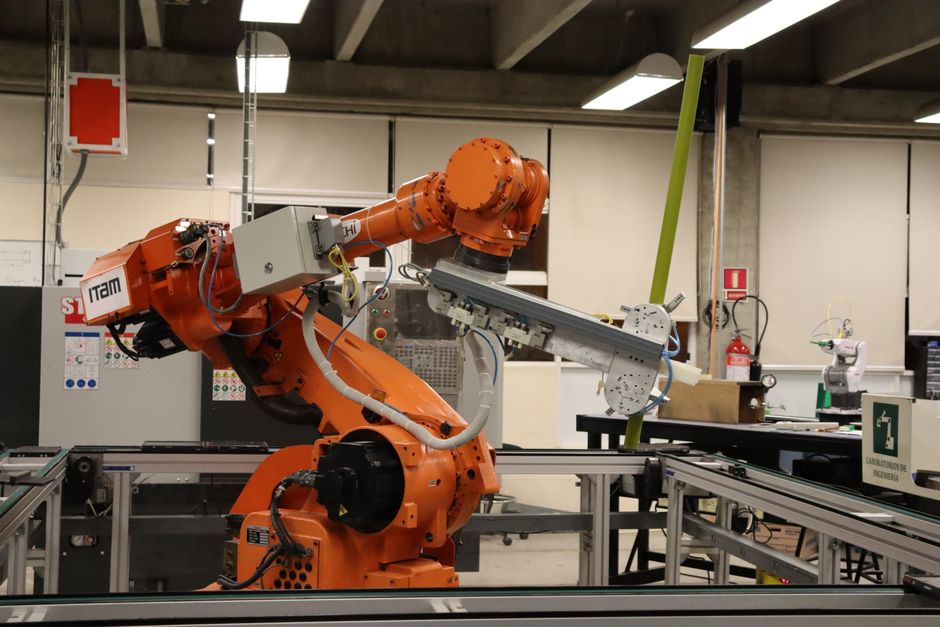
Robotics technician programs train you to install, program, troubleshoot, and repair the automated machines that factories, warehouses, and hospitals increasingly run on — and most of them take two years or less at a community college, not four years at a university. If you have been told that AI is going to erase entry-level office work, this is the honest counter-move: someone still has to physically keep the robots running, and that someone is standing on a plant floor with a multimeter.
- What Robotics Technician Programs Actually Teach You
- How Long Robotics Technician Programs Take and What They Cost
- Comparing Certificates, Degrees, and Apprenticeships
- What the Pay and Job Outlook Really Look Like
- How to Pay for Robotics Technician Programs
- What Most People Get Wrong About Robotics Technician Programs
- How to Vet Robotics Technician Programs Before You Enroll
- Frequently Asked Questions
Here is the short version. You enroll in a certificate or associate degree at a community or technical college, you spend most of your class time in a lab wiring panels and programming controllers, you stack industry certifications on top, and you graduate into maintenance and automation roles.
According to the Bureau of Labor Statistics, the median annual wage for electro-mechanical and mechatronics technologists and technicians was $70,760 in May 2024 — and the typical entry-level education for that job is an associate degree, not a bachelor’s.
This guide walks through what these programs contain, what they cost, how federal aid applies, what the pay data actually says, and the traps that catch students who pick a program on the strength of a brochure photo. Nothing here guarantees you a job or an award — but knowing how the system works meaningfully improves your odds.
What Robotics Technician Programs Actually Teach You
The word “robotics” makes people picture coding humanoids. The reality is more useful and more employable. Most robotics technician programs are built around mechatronics — the overlap of mechanical systems, electrical systems, fluid power, and industrial controls. You learn the machine as a whole system, then you learn to find the one part of it that broke at 2 a.m.
A typical course sequence covers DC and AC electrical fundamentals, motor control, hydraulics and pneumatics, mechanical drives, sensors, industrial safety and lockout/tagout, PLC (programmable logic controller) programming, and robot teach-pendant operation. Many programs add networking and data basics, since modern equipment reports to plant software.
What separates strong robotics technician programs from weak ones is lab hours on real industrial hardware — Allen-Bradley or Siemens PLCs, and robot arms from vendors like FANUC, ABB, or Universal Robots. Ask any program directly how many hours you personally spend with hands on equipment versus watching simulations. That single question tells you more than any ranking.
How Long Robotics Technician Programs Take and What They Cost
Length varies by school, and you should confirm it against the college’s own published catalog rather than a third-party site. Broadly, three tiers exist. Short certificates run a semester or two. Longer certificates run three to four semesters. Associate of Applied Science degrees are commonly around 60 credit hours, though published plans range higher — Ivy Tech Community College, for example, lists its Advanced Automation and Robotics Technology AAS at 75 credit hours across five semesters.
Cost varies enormously by state, residency, and whether your college charges per credit or per term. Collin College in Texas publishes an estimated total program cost under $7,000 for in-district students in its robotics AAS. That is a Texas figure for one school — do not assume it transfers to yours. Pull the tuition-per-credit rate from your target college’s own tuition page and multiply it by the program’s credit count.
Industry certifications are often bundled into robotics technician programs, which is a real financial advantage. FANUC’s Certified Education Robot Training is offered through participating high schools, community colleges, and universities, and SACA (Smart Automation Certification Alliance) micro-credentials like C-101 and C-201 are embedded in many mechatronics courses. Buying equivalent training as a working adult typically costs far more.
Comparing Certificates, Degrees, and Apprenticeships
Robotics technician programs are not the only route in. A registered apprenticeship pays you from day one while you train, and the U.S. Department of Labor reports through Apprenticeship.gov that 93% of apprentices retain employment after completing a program. The tradeoff is competition for slots and less scheduling flexibility.
| Path | Typical length | You pay or you earn? | Best fit if… |
|---|---|---|---|
| Short certificate | 1–2 semesters | You pay tuition | You want the fastest entry into maintenance work |
| Long certificate | 3–4 semesters | You pay tuition | You want PLC and robot depth without full gen-eds |
| AAS degree | ~60+ credit hours | You pay tuition | You want the credential BLS lists as typical entry education |
| Registered apprenticeship | Varies by sponsor | You earn wages | You’d rather learn on a payroll than in a classroom |
These paths stack rather than compete. Plenty of people finish a certificate, get hired, and then have an employer help fund the remaining degree credits. Ask any program whether its certificate credits apply toward its associate degree — good robotics technician programs are designed so they do, and the ones that aren’t will tell you if you ask plainly.
What the Pay and Job Outlook Really Look Like
Be careful here, because “robotics” gets marketed with numbers that belong to engineers, not technicians. Use BLS categories. The Bureau of Labor Statistics reports the median annual wage for electro-mechanical and mechatronics technologists and technicians was $70,760 in May 2024, but projects employment in that specific occupation to grow only 1% from 2024 to 2034 — slower than average — with about 1,300 openings per year.
The bigger door is the adjacent one. BLS reports the median annual wage for industrial machinery mechanics, machinery maintenance workers, and millwrights was $63,510 in May 2024, with employment projected to grow 13% from 2024 to 2034 — much faster than average — and roughly 54,200 openings each year. That is where most graduates of robotics technician programs actually land, and it is a far larger job market.
Wages also vary sharply by state and metro area. BLS publishes state-level and metro-level wage data in its Occupational Employment and Wage Statistics tables, so look up your own area before you make a decision based on a national median. Licensing is a separate question: most technician roles don’t require a state license, but electrical work often does, and requirements vary by state — check your state’s licensing board directly.
How to Pay for Robotics Technician Programs
Start with the FAFSA at studentaid.gov. Federal Student Aid set the maximum Federal Pell Grant at $7,395 for the 2026–27 award year, with a minimum award of $740. Pell doesn’t have to be repaid, and how much you receive depends on your Student Aid Index, cost of attendance, and enrollment intensity — your school’s financial aid office calculates your actual number, not a website.
There is a new development worth knowing. Workforce Pell Grants, created in 2025 budget legislation, allow Pell funds for eligible short-term workforce programs running 150 to fewer than 600 clock hours over 8 to under 15 weeks, with the Department of Education’s rule effective July 20, 2026 and early implementation permitted from July 1, 2026. Each program needs both state and federal approval first, so eligibility differs school to school — ask your college whether a specific program has been approved.
🎓 Get Free Scholarship Alerts
Free · No spam · Unsubscribe anytime
Keep aid once you have it by understanding Satisfactory Academic Progress. Federal rules cap aid at a maximum timeframe of 150% of your program’s published length, and schools also set minimum GPA and completion-pace standards. Those specific thresholds vary by school. If you fall below them, most colleges have a written appeal process — appeals are reviewed case by case and are never automatic, so file early and document what happened.
What Most People Get Wrong About Robotics Technician Programs
The most common mistake is assuming the job is mostly programming. It isn’t. Employers hiring technicians want someone who can read a wiring diagram, diagnose a failed sensor, and safely work around energized equipment. Programming matters, but troubleshooting is the skill that gets you hired and promoted.
The second mistake is skipping accreditation and credit-transfer checks. Before you enroll anywhere, confirm the school is accredited and eligible for federal aid — you can verify this using the Department of Education’s Federal School Code search on studentaid.gov. Unaccredited programs may leave you ineligible for Pell and unable to transfer credits later.
The third is believing AI makes this path either bulletproof or doomed. Neither is true. BLS projections show the narrow mechatronics technician occupation growing slowly while industrial maintenance grows fast — meaning the field is real but the specific job title you target matters. The fourth mistake is ignoring shift work; a lot of automation maintenance happens on nights and weekends, and that is worth knowing before you commit two years.
How to Vet Robotics Technician Programs Before You Enroll
Treat this like a purchase, because it is one. Work through a short checklist with each school:
- Verify accreditation and federal aid eligibility on studentaid.gov before paying any deposit.
- Ask for placement data — what share of last year’s graduates were employed in the field, and where. If a school won’t share it, note that.
- Count lab hours on actual industrial hardware, and ask which robot and PLC brands you’ll touch.
- Confirm stacking — do certificate credits count toward the AAS, and does the AAS transfer to a bachelor’s if you later want one?
- Check embedded certifications (FANUC, SACA, or similar) and whether exam fees are included in tuition.
- Watch for pressure tactics. The FTC warns consumers that high-pressure sales and promises of guaranteed jobs are warning signs; no legitimate school can guarantee employment.
Also talk to your state workforce agency. Many states fund training through WIOA (Workforce Innovation and Opportunity Act) grants that can cover costs Pell doesn’t, and eligible training provider lists vary by state — your local American Job Center can tell you what applies where you live.
Frequently Asked Questions
Do robotics technician programs require strong math?
You need solid algebra and comfort with basic trigonometry for topics like motor sizing and mechanical drives. Most colleges place you by assessment and offer prep courses if you’re not ready. Calculus is generally required for engineering degrees, not technician programs — but confirm math requirements in your specific college’s catalog.
Can I get financial aid for a short certificate?
Sometimes. Traditional Pell has generally required longer programs, but Workforce Pell Grants open eligibility to approved short-term programs of 150 to under 600 clock hours beginning July 2026, subject to state and federal approval. Whether a given certificate qualifies depends on the program, so ask your financial aid office directly.
Do I need a state license to work as a robotics technician?
Usually not for maintenance and automation technician roles, but this varies by state and by task. Electrical work in particular is regulated differently in every state, and some employers require specific safety credentials. Check your state’s licensing board and ask employers what they require before assuming you’re covered.
Is a degree better than an apprenticeship?
Neither is universally better. BLS lists an associate degree as typical entry-level education for mechatronics technicians, which makes the degree a safe default. An apprenticeship pays you while you train and, per Apprenticeship.gov, has strong post-completion retention. Choose based on whether you need income now and whether local sponsors are hiring.
Ready to find money for school?
Find Money Where You Live
Scholarship and grant programs change from state to state, and many of the biggest awards come from your own state’s aid programs. Pick your state to see the scholarships that apply where you live.
See Scholarships in All 50 States →
Sources & How to Verify
The facts on this page are drawn from official government and primary sources. Rules, figures, and program details change, so always confirm the current details with the official agency, your school’s financial aid office, or the program’s own published rules.
- Federal Student Aid: studentaid.gov — the official source for FAFSA, grants, work-study, and aid rules
- FTC Consumer Advice: consumer.ftc.gov — scholarship and financial aid scam guidance
- IRS: irs.gov — how scholarships and fellowships are treated for taxes
- Bureau of Labor Statistics: bls.gov/ooh — official wage and job-outlook data for every career
- Your school’s financial aid office: aid rules vary by school — for your specific situation, their answer is the one that counts
Content last reviewed August 2026. If you notice outdated information, please contact us.
Related Guides
- Scholarships by State (50-State Guide)
- More in This Category
- Scholarship Scam Checks
- College Survival Guide
- All Scholarship Resources
- Browse All Scholarships
Informational only — not legal, tax, financial, or academic advice. Spot Scholarships is an independent educational resource. Financial aid rules, scholarship terms, school policies, and licensing requirements vary by school, program, and state and change over time, so always verify the current details with your school’s financial aid office, the official agency, or the program’s published rules before acting. Nothing on this page guarantees admission, aid, or an award.