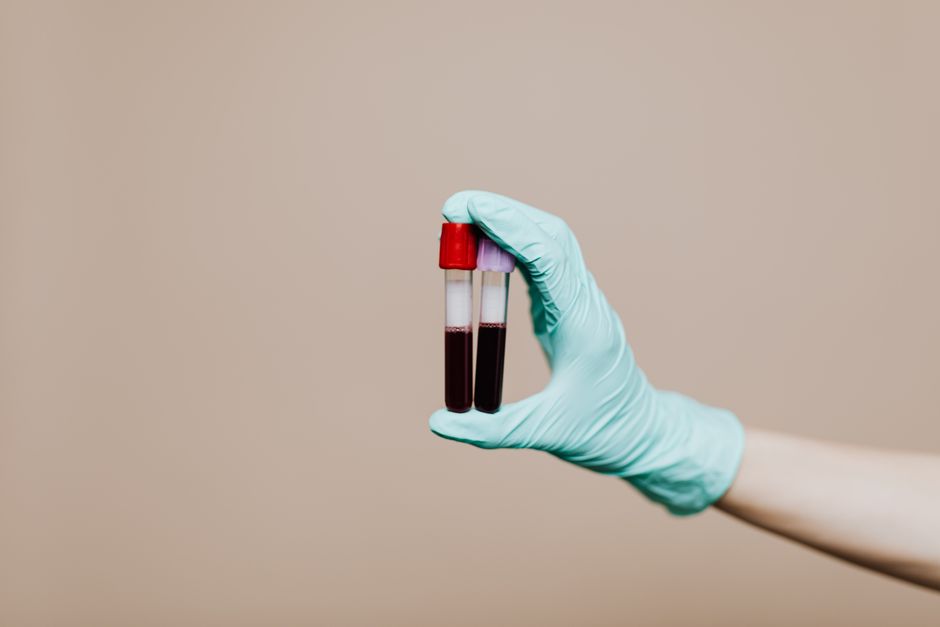
Phlebotomy training is one of the fastest legitimate on-ramps into a healthcare career in the United States — most programs run somewhere between four weeks and one semester, and you can be drawing blood in a hospital or lab with no college degree behind you.
- What Phlebotomy Training Actually Involves
- How Long Phlebotomy Training Takes and What It Costs
- Certification: The Exam That Follows Your Phlebotomy Training
- Licensing Rules Vary by State — Check Before You Enroll
- What Phlebotomists Actually Earn
- Paying for Phlebotomy Training
- What Most People Get Wrong About Phlebotomy Training
- Frequently Asked Questions
The U.S. Bureau of Labor Statistics lists the typical entry-level education for phlebotomists as a postsecondary nondegree award, which is the formal way of saying “a certificate, not a diploma.” That is a real distinction, and it matters if you are trying to start earning quickly.
Here is the honest version of the path. You enroll in a program at a community college, a hospital-run school, or a private career school. You sit through classroom hours on anatomy, safety, and specimen handling. Then you do a clinical externship where you stick actual human arms under supervision. Afterward you sit a national certification exam. Depending on where you live, you may also need a state credential before you can legally work.
This guide walks through each step in order — what the training covers, what it costs, what certification involves, how licensing differs by state, what the pay looks like according to BLS data, and where financial aid may or may not apply. No hype, no promises about getting hired. Just the mechanics.
What Phlebotomy Training Actually Involves
Phlebotomy training has two halves, and every reputable program includes both. The first is didactic — classroom or online instruction covering circulatory anatomy, order of draw, tube additives, infection control, OSHA bloodborne pathogen standards, and patient identification. The second is clinical: supervised hands-on practice, first on training arms and classmates, then on real patients at a partner site.
The clinical half is the part you should scrutinize before enrolling. A program that promises certification but cannot tell you where you will do your externship is a program that may leave you stuck. Ask, in writing, whether clinical placement is arranged for you or whether you are expected to find your own site.
Programs also typically require documentation before clinicals: immunization records, a TB test, a background check, and sometimes a drug screen. Those are employer and hospital requirements, not school inventions, and they cost extra.
How Long Phlebotomy Training Takes and What It Costs
Program length is the number most people search for, and it genuinely varies. Accelerated private programs can finish in four to eight weeks. Community college phlebotomy training is often structured as a single semester, roughly 12 to 16 weeks, because it is built around the academic calendar rather than around speed.
Hour requirements are driven by what comes next. The ASCP Board of Certification’s phlebotomy route accepts a structured program of 40 hours of classroom instruction plus 100 hours of clinical training including a minimum of 100 venipunctures. California’s Department of Public Health requires a CDPH-approved program with at least 40 didactic and 40 clinical hours, plus documented venipunctures and skin punctures. Your program’s length follows whichever standard it is built to meet.
Tuition varies widely by school and region, so treat any single number as a starting point rather than a quote. Community colleges are usually the low end; private accelerated schools the high end. What you should do is request an itemized cost sheet from each school you are considering.
| Cost item | What it covers | Where to verify |
|---|---|---|
| Tuition and fees | Classroom and clinical instruction | The school’s published catalog or net price calculator |
| Certification exam | National exam registration | NHA or ASCP official site — fees change |
| State credential | Application, fingerprinting, license fee | Your state health department or licensing board |
| Health clearances | Immunizations, TB test, background check | Your program’s clinical requirements list |
| Supplies | Scrubs, textbook, gloves, liability insurance | The school’s supply list |
Certification: The Exam That Follows Your Phlebotomy Training
Certification is separate from your phlebotomy training. Finishing a program makes you eligible to test; it does not make you certified. The main national certifying bodies are the National Healthcareer Association (NHA), the ASCP Board of Certification, American Medical Technologists (AMT), and the National Center for Competency Testing (NCCT).
NHA issues the Certified Phlebotomy Technician (CPT) credential. ASCP issues the Phlebotomy Technician, PBT(ASCP). Each publishes its own eligibility routes, exam format, and fees on its own website, and those change — check the current fee on the certifying body’s official page before you budget, rather than trusting a third-party figure.
Which one should you sit for? Ask local employers directly. Hospital HR departments and lab recruiters will tell you which credentials they accept. That single phone call is worth more than any online ranking of certifying agencies.
Licensing Rules Vary by State — Check Before You Enroll
This is the step people skip, and it is the expensive one to get wrong. Most states do not license phlebotomists at all; certification and hiring standards are left to employers. A handful of states — California, Washington, Nevada, and Louisiana are the ones commonly cited — do impose a state credential requirement.
California is the strictest and most documented. The California Department of Public Health issues the Certified Phlebotomy Technician I (CPT I) certificate, and its published requirements include completing a CDPH-approved training program and passing an exam from a CDPH-approved certifying organization. Approval of your program matters: a California employer generally cannot hire you on an out-of-state certificate alone.
Do not take a figure you read online — including from this article — as your state’s rule. Requirements change, and only your state’s health department or licensing board is authoritative. Search your state’s health department site for “phlebotomy” before you pay any tuition deposit.
What Phlebotomists Actually Earn
According to the U.S. Bureau of Labor Statistics, the median annual wage for phlebotomists was $43,660 in May 2024. BLS reports that the lowest 10 percent earned less than $34,860 and the highest 10 percent earned more than $57,750. Median means half earned more and half earned less — it is not a starting salary.
On employment, BLS reports phlebotomists held about 139,700 jobs in 2024, with employment projected to grow 6 percent from 2024 to 2034 — faster than the average for all occupations — and about 18,400 openings projected each year on average over the decade. Many of those openings come from workers leaving the occupation, not just new positions.
🎓 Get Free Scholarship Alerts
Free · No spam · Unsubscribe anytime
Pay varies substantially by state, metro area, employer type, and shift. BLS publishes state and metro wage data through its Occupational Employment and Wage Statistics tables, which is where you should look for your own area rather than relying on a national median.
Paying for Phlebotomy Training
Whether federal aid covers your phlebotomy training depends entirely on the program and the school. Federal Pell Grants are only available at institutions participating in federal student aid programs and for eligible programs — many short private courses do not qualify. A community college certificate is more likely to be aid-eligible than a four-week private bootcamp.
Two things to know. The U.S. Department of Education announced a maximum Federal Pell Grant of $7,395 for the 2026–27 award year. Separately, Workforce Pell Grants took effect July 1, 2026, extending Pell eligibility to certain short-term programs of 150 to 599 clock hours that meet federal and state quality requirements — with awards prorated by program length.
Rules here vary by school and program, and eligibility is decided case by case. File the FAFSA at studentaid.gov, then ask the financial aid office at the specific school whether that specific program is aid-eligible. Also ask your state workforce agency about WIOA-funded training, which sometimes covers short healthcare programs outright.
What Most People Get Wrong About Phlebotomy Training
The biggest mistake is assuming certification equals employment. It does not. Certification makes you eligible to be considered; hiring depends on the local market, your clinical hours, your background check, and your interview. Nobody can promise you a job, and any school that does is telling you something it cannot back up.
The second mistake is enrolling before checking accreditation and state approval. In California, a program not approved by CDPH will not get you licensed, regardless of how good the marketing is. Verify approval on the state agency’s own list, not the school’s website.
Third: people treat phlebotomy training as a dead end. It frequently is not. It is common to work as a phlebotomist while completing prerequisites for nursing, medical laboratory science, or a physician assistant track. The patient contact hours and clinical familiarity count for something on later applications.
Fourth: underestimating the work itself. You will handle needles, frightened patients, difficult veins, early shifts, and biohazard protocols. BLS notes phlebotomists in hospitals and labs may work nights, weekends, and holidays. Shadow someone for a day if you can before committing money.
Frequently Asked Questions
How long does phlebotomy training take from start to finish?
Most programs run from about four weeks to a full semester, depending on format and hour requirements. Add time afterward for scheduling and passing your certification exam, plus state credentialing if your state requires it. Ask each school for its exact clock hours.
Do I need a high school diploma to start phlebotomy training?
Most programs and certifying bodies require a high school diploma or GED, and California’s CPT I requirements include one. Some programs enroll current high school students through dual-enrollment or career-tech pathways. Confirm with the specific program.
Is phlebotomy training worth it financially?
That depends on your local wages and what you pay. BLS reports a median annual wage of $43,660 for phlebotomists in May 2024. Compare that against your total program cost and your area’s BLS wage data before deciding.
Can I get certified without completing a formal program?
Sometimes. ASCP and other bodies publish alternate eligibility routes based on documented work experience. Those routes have strict requirements, and they will not satisfy a state that mandates an approved program. Read the certifying body’s current eligibility routes directly.
Ready to find money for school?
Find Money Where You Live
Scholarship and grant programs change from state to state, and many of the biggest awards come from your own state’s aid programs. Pick your state to see the scholarships that apply where you live.
See Scholarships in All 50 States →
Sources & How to Verify
The facts on this page are drawn from official government and primary sources. Rules, figures, and program details change, so always confirm the current details with the official agency, your school’s financial aid office, or the program’s own published rules.
- Federal Student Aid: studentaid.gov — the official source for FAFSA, grants, work-study, and aid rules
- FTC Consumer Advice: consumer.ftc.gov — scholarship and financial aid scam guidance
- IRS: irs.gov — how scholarships and fellowships are treated for taxes
- Bureau of Labor Statistics: bls.gov/ooh — official wage and job-outlook data for every career
- Your school’s financial aid office: aid rules vary by school — for your specific situation, their answer is the one that counts
Content last reviewed August 2026. If you notice outdated information, please contact us.
Related Guides
- Scholarships by State (50-State Guide)
- More in This Category
- Scholarship Scam Checks
- College Survival Guide
- All Scholarship Resources
- Browse All Scholarships
Informational only — not legal, tax, financial, or academic advice. Spot Scholarships is an independent educational resource. Financial aid rules, scholarship terms, school policies, and licensing requirements vary by school, program, and state and change over time, so always verify the current details with your school’s financial aid office, the official agency, or the program’s published rules before acting. Nothing on this page guarantees admission, aid, or an award.