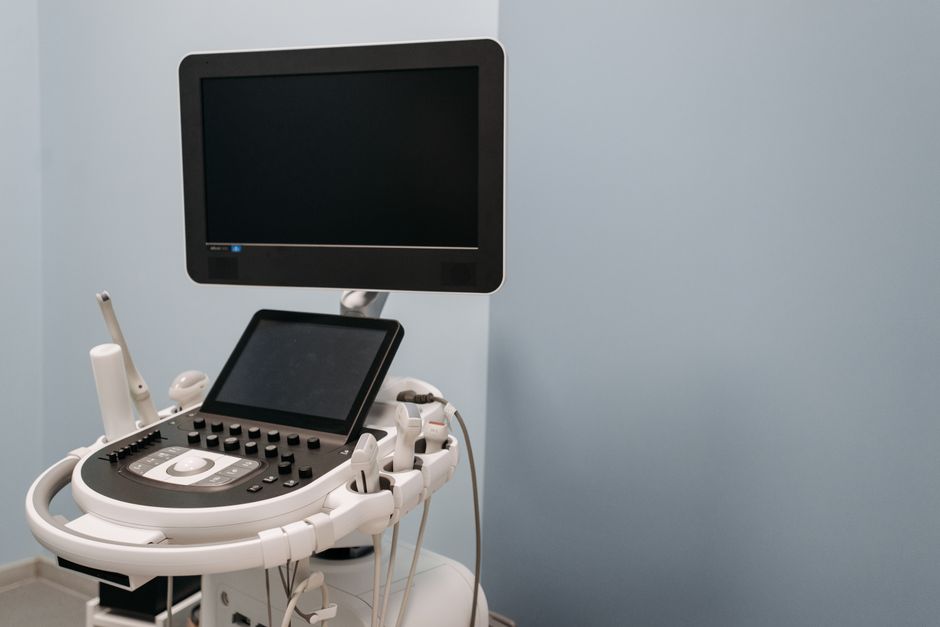
A sonography program trains you to run diagnostic ultrasound equipment, and most students finish one in about 18 to 24 months through a certificate or associate degree, then sit for national certification exams. According to the U.S. Bureau of Labor Statistics, the median annual wage for diagnostic medical sonographers was $89,340 in May 2024, and an associate’s degree is the typical entry-level education. That combination — short training, strong pay — is why these programs are competitive.
- What a Sonography Program Teaches You
- Sonography Program Requirements You Need to Meet
- How Long a Sonography Program Takes
- Salary and Job Outlook After a Sonography Program
- Certification and Licensing After a Sonography Program
- Paying for a Sonography Program
- What Most People Get Wrong About a Sonography Program
- Frequently Asked Questions
Here is the honest version of what you are signing up for. You will take anatomy, physics, and patient care coursework, then spend hundreds of unpaid clinical hours in a hospital or imaging center scanning real patients under supervision. Admission is not automatic. Many schools receive far more applications than they have clinical slots, so meeting the minimum requirements gets you considered, not accepted.
This guide walks through the prerequisites, the realistic timeline, what certification costs and requires, what the BLS actually reports for pay and job growth, and how licensing differs depending on which state you plan to work in. Every figure below is tied to the source that published it, and where a rule varies by school or state, this guide says so instead of guessing.
What a Sonography Program Teaches You
Sonographers use high-frequency sound waves to create images of organs, blood vessels, and developing pregnancies. Physicians read those images to diagnose conditions. The BLS notes that sonographers do more than push buttons — they position patients, recognize normal versus abnormal images, and flag findings for the interpreting physician.
A typical curriculum splits into three parts: didactic coursework (ultrasound physics, cross-sectional anatomy, pathology), scan lab practice on classmates and phantoms, and supervised clinical rotations. Specialty tracks include abdominal, obstetric and gynecologic, vascular, and cardiac (echocardiography). Some schools let you add a second specialty; others require you to pick one at admission.
Accreditation matters more here than in most fields. The Commission on Accreditation of Allied Health Education Programs (CAAHEP), through the Joint Review Committee on Education in Diagnostic Medical Sonography, accredits these programs, and CAAHEP publishes a searchable list of accredited programs by state on caahep.org. Verify accreditation yourself before you apply anywhere.
Sonography Program Requirements You Need to Meet
Requirements vary by school, so treat this as the common pattern rather than a universal rule. Most programs expect a high school diploma or GED plus college-level prerequisite coursework completed before you start the core sequence.
- Anatomy and physiology with lab, usually two semesters
- College algebra or higher — ultrasound physics is math-heavy
- General physics, required or strongly recommended at many programs
- English composition and often a communications or psychology course
- Medical terminology and basic computer coursework
Beyond coursework, expect a minimum GPA (commonly stated in the 2.5 to 3.0 range, but confirm the exact number with the school), a criminal background check, drug screening, immunization records, CPR certification, and sometimes healthcare observation hours. Because clinical sites set their own onboarding rules, a school cannot always waive these.
Some programs also require an entrance exam such as the TEAS or an interview. Others use a points system that rewards prerequisite grades, prior healthcare credentials, or residency. Ask the admissions office for their published selection rubric — schools that use one will usually share it, and it tells you exactly where to put your effort.
How Long a Sonography Program Takes
Length depends on the credential and on how much prerequisite work you have already finished. The clock most students care about starts after prerequisites, and schools count it differently, so ask whether the advertised length includes prerequisites.
| Credential | Typical length | Who it fits |
|---|---|---|
| Certificate | About 12–18 months | Applicants who already hold a degree or another allied health credential |
| Associate degree (AAS/AS) | About 2 years after prerequisites | Most students entering from high school or community college |
| Bachelor’s degree | About 4 years | Students who want management, education, or research paths |
Clinical hours are the part people underestimate. Programs commonly schedule full weekday shifts at a hospital for two or three days a week during clinical semesters, and those hours are unpaid. That makes holding a full-time job during the clinical phase difficult. Ask each school how many total clinical hours it requires and whether rotations may be assigned an hour or more from campus.
Salary and Job Outlook After a Sonography Program
Anchor your expectations to federal data, not to school marketing. The BLS Occupational Outlook Handbook reports a median annual wage of $89,340 for diagnostic medical sonographers in May 2024, with the lowest 10 percent earning less than $64,760 and the highest 10 percent earning more than $123,170.
On demand, the BLS projects employment of diagnostic medical sonographers to grow 13 percent from 2024 to 2034 — much faster than the average for all occupations — with about 5,800 openings projected each year on average over the decade. The BLS counted roughly 90,000 sonographer jobs in 2024, so this is a real but relatively small occupation.
Two cautions. Median means half earn less, and new graduates start below the median, not at it. And wages vary sharply by metro area and employer type; the BLS Occupational Employment and Wage Statistics tables at bls.gov/oes let you look up your own state and metro instead of relying on a national figure.
Certification and Licensing After a Sonography Program
Graduating is not the finish line. Most employers want a national credential, most commonly the Registered Diagnostic Medical Sonographer (RDMS) from the American Registry for Diagnostic Medical Sonography. ARDMS requires passing the Sonography Principles and Instrumentation (SPI) exam plus a specialty exam. ARDMS publishes its prerequisite pathways and current fees on ardms.org — check there, because fees change.
Graduating from a CAAHEP-accredited program is the most direct ARDMS prerequisite pathway, which is the practical reason accreditation matters. ARDMS also lists alternate pathways built on a degree plus documented full-time clinical ultrasound experience. Cardiovascular Credentialing International (CCI) and ARRT offer other recognized credentials.
Licensing varies by state, and most states do not license sonographers at all. The Society of Diagnostic Medical Sonography tracks state licensure and reports that only a small number of states — including New Mexico, North Dakota, and Oregon — mandate it. Confirm your own state through its licensing board or the SDMS state licensure page before you assume either way.
Paying for a Sonography Program
If your program is at a school that participates in federal student aid, start with the FAFSA at studentaid.gov. Federal Student Aid published a maximum Federal Pell Grant of $7,395 for the 2026–27 award year, with a minimum award of $740. Pell is need-based and does not have to be repaid.
🎓 Get Free Scholarship Alerts
Free · No spam · Unsubscribe anytime
Certificate and short programs are not always eligible for the same aid as degree programs, and eligibility rules differ by school and program length. Your school’s financial aid office is the only source that can tell you what your specific enrollment qualifies for — ask them directly rather than assuming a rule you read online applies to you.
Also budget for costs outside tuition: scrubs, background checks, immunizations, liability insurance, transportation to clinical sites, exam prep materials, and certification exam fees. Some hospitals offer tuition assistance to current employees, which is worth asking about before you enroll.
What Most People Get Wrong About a Sonography Program
Assuming a waitlist is a guarantee. Being placed on a list does not mean you will be admitted. Apply to several accredited schools in the same cycle.
Ignoring accreditation. A cheaper or faster non-accredited option can leave you unable to take the exam employers want. Verify on caahep.org before paying a deposit.
Underestimating the physics. The SPI exam is genuinely hard, and students who coasted through algebra often struggle. Take the math prerequisites seriously the first time.
Believing the median is a starting salary. The BLS $89,340 figure is the midpoint for all sonographers, including experienced ones in high-wage metros.
Not asking about clinical placement. Some schools guarantee a site; others make you find one. That single question can change your whole experience.
Frequently Asked Questions
Can I get into a sonography program with a low GPA?
Possibly, but it is harder. Many programs use competitive selection, so a GPA above the stated minimum improves your odds without guaranteeing admission. Retaking a weak science prerequisite, finishing all prerequisites before applying, and gaining healthcare experience are the levers most within your control. Ask the school how it weights repeated courses.
Do I need a degree before starting?
Not usually. Associate degree programs admit students directly after prerequisites. Certificate programs generally require an existing degree or allied health credential, because that is how applicants meet ARDMS prerequisite pathways. Check each school’s published admission criteria, since these differ significantly.
Is sonography licensed in every state?
No. Most states do not require a state license, and the SDMS reports only a few states mandate one. Employers in unlicensed states still typically require ARDMS or CCI certification. Contact your state’s health licensing board to confirm current requirements before you rely on secondhand information.
How much do certification exams cost?
ARDMS charges separate fees for the SPI exam and each specialty exam, and published amounts have been in the low hundreds of dollars per exam. Because fees are updated periodically, confirm the current amount on ardms.org rather than budgeting from an older figure you find elsewhere.
Ready to find money for school?
Find Money Where You Live
Scholarship and grant programs change from state to state, and many of the biggest awards come from your own state’s aid programs. Pick your state to see the scholarships that apply where you live.
See Scholarships in All 50 States →
Sources & How to Verify
The facts on this page are drawn from official government and primary sources. Rules, figures, and program details change, so always confirm the current details with the official agency, your school’s financial aid office, or the program’s own published rules.
- Federal Student Aid: studentaid.gov — the official source for FAFSA, grants, work-study, and aid rules
- FTC Consumer Advice: consumer.ftc.gov — scholarship and financial aid scam guidance
- IRS: irs.gov — how scholarships and fellowships are treated for taxes
- Bureau of Labor Statistics: bls.gov/ooh — official wage and job-outlook data for every career
- Your school’s financial aid office: aid rules vary by school — for your specific situation, their answer is the one that counts
Content last reviewed August 2026. If you notice outdated information, please contact us.
Related Guides
- Scholarships by State (50-State Guide)
- More in This Category
- Scholarship Scam Checks
- College Survival Guide
- All Scholarship Resources
- Browse All Scholarships
Informational only — not legal, tax, financial, or academic advice. Spot Scholarships is an independent educational resource. Financial aid rules, scholarship terms, school policies, and licensing requirements vary by school, program, and state and change over time, so always verify the current details with your school’s financial aid office, the official agency, or the program’s published rules before acting. Nothing on this page guarantees admission, aid, or an award.