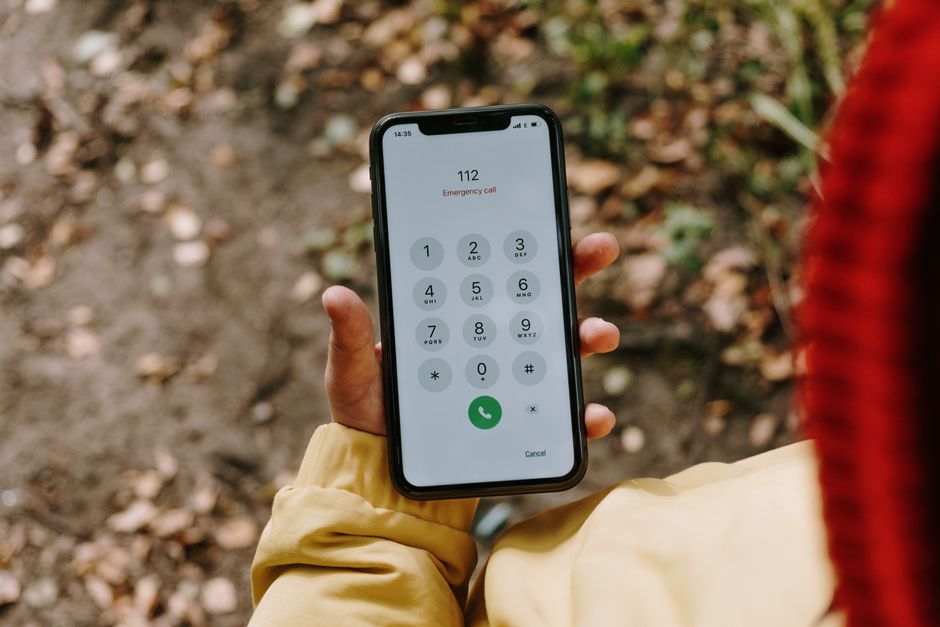
Scholarship phone call scams almost always want one of three things: an upfront fee, your bank or card number, or your login credentials — and the “award” being dangled is either invented or something you could have applied for free. If a stranger calls to tell you that you have won money for college and then asks you to pay, verify, or confirm anything financial on that same call, you can hang up.
- How Scholarship Phone Call Scams Open the Conversation
- What the Caller Really Wants From You
- The Payment Request Is Where Scholarship Phone Call Scams Give Themselves Away
- Real Awards vs. Scholarship Phone Call Scams: A Side-by-Side
- What Most People Get Wrong About Scholarship Phone Call Scams
- How to Verify an Award and Report Scholarship Phone Call Scams
- If You Already Paid or Shared Information
- Frequently Asked Questions
You will not lose a real scholarship by hanging up and calling back through a number you looked up yourself.
This matters because the phone is an expensive channel to get wrong. According to the FTC’s 2025 fraud data, phone calls were the third most common way scammers made contact but carried the highest median loss of any contact method at $1,835 — far above the $700 median loss across all fraud reports that year. Scholarship phone call scams work by borrowing the tone of good news, which is exactly the tone that lowers your guard.
Below is what actually happens on these calls, step by step: how the caller opens, what they ask for and in what order, how to check whether an award is real, and what to do in the first ten minutes if you already handed something over. Scholarship phone call scams follow a script, and once you have read the script, the calls stop being convincing.
How Scholarship Phone Call Scams Open the Conversation
The opening line is engineered to sound official and flattering at once. The FTC lists several tells it has documented for decades: the caller says you have been selected as a “finalist” for an award you never applied for, or claims “the scholarship is guaranteed or your money back,” or insists “you can’t get this information anywhere else.” None of those statements can be true of a legitimate award, because no outside company controls a scholarship committee’s decisions.
Scholarship phone call scams also lean on caller ID. Under the FCC’s Truth in Caller ID Act rules, transmitting misleading caller ID information with intent to defraud can carry penalties of up to $10,000 per violation — but that penalty exists precisely because spoofing is easy and common. A call that displays your school’s main number, a 1-800 number, or a Washington, D.C. area code proves nothing at all.
A second common opener is the “free financial aid seminar” invitation. The FTC warns that these events are frequently sales pitches for paid scholarship search services rather than genuine aid workshops. The invitation itself is not proof of fraud, but it should move you from listening mode to verifying mode.
What the Caller Really Wants From You
There are three payloads, and skilled callers will try for whichever one you seem likeliest to give up.
Money. The FTC specifically flags bogus “application,” “disbursement,” “redemption,” and “processing” fees as the classic mechanism. Real scholarships do not charge you to apply, to reserve your spot, to confirm eligibility, or to release your own award money. Federal Student Aid states plainly that the FAFSA form is free and that you should never pay anyone to fill out or process it.
Financial data. The caller asks for your checking account or card number “to confirm eligibility” or “to direct-deposit your award.” The FTC has documented companies that then debited those accounts without consent. Legitimate scholarship disbursement in the United States overwhelmingly runs through your school’s financial aid office, not through a number you read aloud to a stranger.
Account access. The newest variation targets your StudentAid.gov credentials or FSA ID. Federal Student Aid is explicit: official partners will never ask for your password, and you should never share your FSA ID with anyone — including consultants — because it can be used to access your account and your personal information.
The Payment Request Is Where Scholarship Phone Call Scams Give Themselves Away
How you are asked to pay is one of the most reliable signals available. The FTC’s consumer guidance points out that scammers steer people toward payment methods that are hard to reverse. In 2025, the FTC reported that the largest total losses — more than $4 billion combined — came from scams paid by bank transfer and cryptocurrency, and that roughly one in four people who report losing money to fraud say a gift card was involved.
Apply that to scholarships. A legitimate scholarship sends money to you or to your school; it does not ask you to send money out first. So any request to wire funds, buy gift cards and read the codes, send crypto, or use a peer-to-peer payment app is a stop sign on its own — no further analysis needed. Scholarship phone call scams collapse the moment you say “I don’t pay to receive money.”
Watch the timing pressure, too. Real deadlines exist and are published in writing; a deadline that exists only inside a phone call, expiring in minutes, is a manufactured one.
Real Awards vs. Scholarship Phone Call Scams: A Side-by-Side
| Signal | Legitimate scholarship | Likely scam |
|---|---|---|
| How you first hear about it | You applied; award arrives by email, letter, or your school portal | Unsolicited call about an award you never applied for |
| Fees | None to apply, claim, or receive | “Processing,” “redemption,” “disbursement,” or “application” fee |
| Guarantees | Never guaranteed — a committee decides | “Guaranteed or your money back” |
| Information requested | Application materials; banking handled through your school | Card or checking account number, FSA ID, or password on the call |
| Payment direction | Money flows to you or your school | Money flows from you, often by gift card, wire, or crypto |
| Verifiability | Published rules, real address, findable sponsor | “You can’t get this information anywhere else” |
One row deserves emphasis: verifiability. Whether an award is real is a question you can answer in about five minutes without the caller’s help, and doing so costs you nothing.
What Most People Get Wrong About Scholarship Phone Call Scams
The biggest mistake is thinking the danger is stupidity. It isn’t. These calls work on capable students because they exploit context: you have applied for things, you are waiting to hear back, and money for college genuinely does show up from organizations you have barely heard of. Scholarship phone call scams don’t need you to be gullible — they need you to be hopeful and busy at the same time.
The second mistake is treating a small fee as a small risk. A $40 “processing fee” is not the real loss; the card number is. Once a caller has your card and your identifying details, the fee is a foot in the door.
🎓 Get Free Scholarship Alerts
Free · No spam · Unsubscribe anytime
Third, many students assume that a caller who knows real details about them must be legitimate. They often do know your name, school, major, or the fact that you filed a FAFSA — that information circulates through data brokers, breaches, and scholarship lists. Knowing things about you is not authentication.
Fourth, people wrongly assume paid scholarship search services are inherently fraudulent. Some are simply overpriced services selling information that is free through your school’s financial aid office, studentaid.gov, and public databases. That’s a bad deal rather than a crime — but the FTC has brought real enforcement actions in this space, including its long-running Project ScholarScam campaign, and Congress passed the College Scholarship Fraud Prevention Act of 2000, which directed enhanced federal sentencing penalties for education-financing fraud effective November 1, 2001.
How to Verify an Award and Report Scholarship Phone Call Scams
Use this sequence. It works whether the call turns out to be real or not.
- End the call. Say you will call back. A real sponsor will not object.
- Search the sponsor independently. Look up the organization’s own website, published eligibility rules, and a mailing address. Do not use any number, link, or email the caller gave you.
- Call your school’s financial aid office. They see outside scholarships routinely and can tell you whether the sponsor is one they recognize and how an outside award would actually be paid at your school.
- Check what it would do to your aid package. Outside scholarships can change your existing aid, and the rules for that adjustment vary by school and by program — ask your financial aid office how your specific package would be affected rather than assuming.
- Never confirm identifiers on an inbound call. Not your Social Security number, not your FSA ID, not a card number.
If the call was a scam, report it. The FTC takes reports at ReportFraud.ftc.gov or by phone at 1-877-FTC-HELP (1-877-382-4357), and reports feed the Consumer Sentinel database that law enforcement uses. Also report scholarship phone call scams to your state attorney general’s office — consumer protection statutes and remedies vary by state, so check your own attorney general’s site for what they cover — and tell your school’s financial aid office, since these campaigns tend to hit one campus at a time.
If You Already Paid or Shared Information
Move fast, and don’t spend energy on embarrassment. Call your bank or card issuer immediately, say the words “fraud” and “unauthorized,” and ask about stopping or reversing the transaction. Timelines and reversal odds differ sharply by payment method — card disputes generally offer the most room, wires and crypto the least — so ask your institution what applies to your specific transaction rather than relying on a general rule.
If you shared gift card numbers, call the card issuer with the receipt and card in hand and ask whether the funds are still recoverable; the FTC advises reporting it to the gift card company right away, because speed sometimes matters.
If you gave up an FSA ID or StudentAid.gov password, change it now, change it anywhere you reused it, and check your account for changes you didn’t make. Then visit IdentityTheft.gov, the FTC’s official recovery site, which builds a personalized recovery plan and pre-filled letters at no cost. Scholarship phone call scams that harvest credentials often surface later as loan or identity problems, so freezing your credit with the three bureaus — free under federal law — is a reasonable next step.
Frequently Asked Questions
Do scholarship phone call scams ever involve a real organization’s name?
Yes, and this is important: imposters frequently borrow the name of a legitimate foundation, school, or government agency. The real organization is not the wrongdoer. Verify by contacting the named organization through a number you look up yourself — most publish scam warnings when their name is being abused.
Can a real scholarship ever charge an application fee?
A very small number of legitimate competitions charge a nominal entry fee, but the FTC’s guidance is to walk away from any offer that requires payment to receive, release, or process an award. Fees to collect money you supposedly won are a scam signal with no legitimate version.
Does joining the Do Not Call Registry stop these calls?
Registering at donotcall.gov is free and worth doing, but the registry restricts legitimate telemarketers — criminals ignore it. Treat it as reducing noise, not as protection. Carrier call-blocking tools and your phone’s built-in spam filtering help more with the illegal calls.
What if the caller says my financial aid will be canceled unless I act now?
That is pressure, not policy. Federal aid decisions come through your school and your StudentAid.gov account, not through urgent phone ultimatums. Hang up and call your financial aid office directly; they can see your actual file and tell you whether anything is genuinely pending.
Ready to find money for school?
Find Money Where You Live
Scholarship and grant programs change from state to state, and many of the biggest awards come from your own state’s aid programs. Pick your state to see the scholarships that apply where you live.
See Scholarships in All 50 States →
Sources & How to Verify
The facts on this page are drawn from official government and primary sources. Rules, figures, and program details change, so always confirm the current details with the official agency, your school’s financial aid office, or the program’s own published rules.
- Federal Student Aid: studentaid.gov — the official source for FAFSA, grants, work-study, and aid rules
- FTC Consumer Advice: consumer.ftc.gov — scholarship and financial aid scam guidance
- IRS: irs.gov — how scholarships and fellowships are treated for taxes
- Bureau of Labor Statistics: bls.gov/ooh — official wage and job-outlook data for every career
- Your school’s financial aid office: aid rules vary by school — for your specific situation, their answer is the one that counts
Content last reviewed August 2026. If you notice outdated information, please contact us.
Related Guides
- Scholarships by State (50-State Guide)
- More in This Category
- Scholarship Scam Checks
- College Survival Guide
- All Scholarship Resources
- Browse All Scholarships
Informational only — not legal, tax, financial, or academic advice. Spot Scholarships is an independent educational resource. Financial aid rules, scholarship terms, school policies, and licensing requirements vary by school, program, and state and change over time, so always verify the current details with your school’s financial aid office, the official agency, or the program’s published rules before acting. Nothing on this page guarantees admission, aid, or an award.