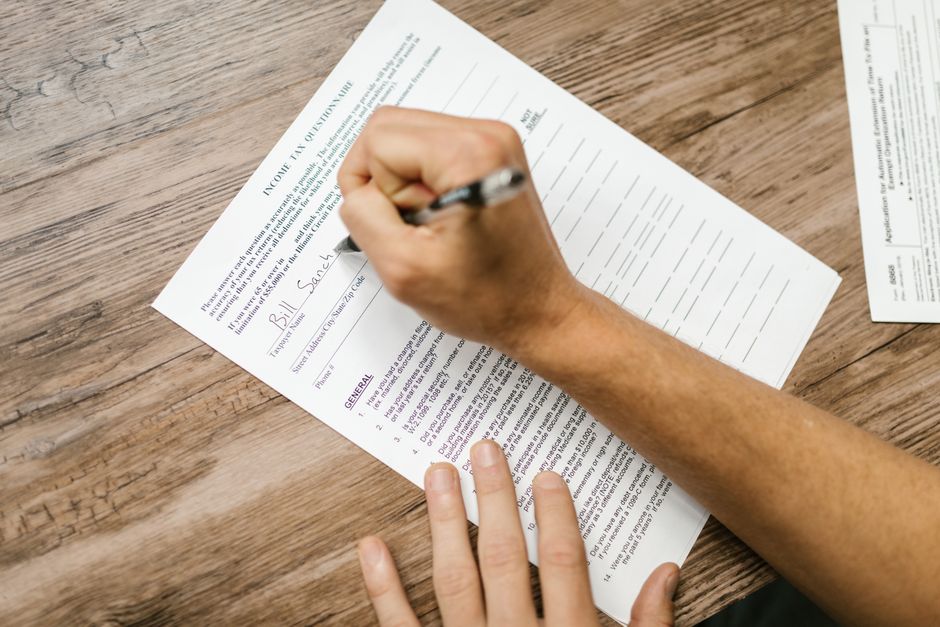
FAFSA help scams are pitches from companies or individuals who charge you a fee to fill out, “unlock,” or “maximize” the Free Application for Federal Student Aid — and you never need to pay any of them. The first word in FAFSA stands for “Free.” Filing costs $0 at studentaid.gov, every year, for every student, no exceptions.
- What FAFSA Help Scams Actually Look Like
- Why the FAFSA Is Free, Start to Finish
- The Red Flags That Expose FAFSA Help Scams
- Free Help vs. Paid “Help”: A Side-by-Side Comparison
- What Most People Get Wrong About FAFSA Help Scams
- What to Do If You Already Paid or Shared Your Login
- Frequently Asked Questions
Here is the short version: if someone asks for money to submit your FAFSA, asks for your StudentAid.gov username and password, or promises you a specific amount of aid, walk away. The Federal Trade Commission is blunt about this — you never have to pay to fill out the FAFSA, and the U.S. Department of Education says nobody legitimate will ever ask for your FSA ID.
The rest of this guide walks through exactly how these pitches work, the red flags that give them away, where to get real help for free, and what to do if you already paid someone or handed over your login. None of it requires money, and most of it takes less than an hour.
What FAFSA Help Scams Actually Look Like
Most FAFSA help scams do not look like obvious fraud. They look like a professional business with a seal, a .com address close to the real one, and a friendly person on the phone who knows the vocabulary. That is the point — official-looking logos and government-sounding names are cheap to fake.
The classic version is a “financial aid consulting company” that offers to handle all the paperwork for a processing fee. According to Federal Trade Commission testimony on scholarship fraud, companies in one set of major cases took roughly $22 million from about 175,000 consumers. The pitch works because filing feels intimidating.
Newer FAFSA help scams arrive by text, DM, or paid social ad during filing season. They offer to “check if you qualify for more aid” or claim your application has a problem only they can fix. Some collect a fee. Others are after your Social Security number and FSA ID, which is worse.
A third variation targets parents specifically: paid “aid maximization” services that promise to restructure your family’s finances so you qualify for more. Some of these cross into telling you to misreport income or assets, which puts your name — not theirs — on a false federal application.
Why the FAFSA Is Free, Start to Finish
The FAFSA is a federal form administered by the U.S. Department of Education’s office of Federal Student Aid. There is no filing fee, no rush fee, no premium tier, and no paid version that gets you a better result. Everyone submits the same form at studentaid.gov and gets scored by the same formula.
That formula produces your Student Aid Index, which schools use to build your aid package. Paying a stranger does not change your SAI, your family’s income, or the money your school has available. The math is the math, and it is applied identically whether you filed alone at midnight or paid someone $299.
Timing does matter, though. The 2026–27 FAFSA opened in late September 2025, and Federal Student Aid lists the federal deadline for that cycle as June 30, 2027. State and school deadlines are usually much earlier — many fall between January and March — so check your state agency and each school’s financial aid page rather than assuming the federal date.
The Red Flags That Expose FAFSA Help Scams
You do not need to memorize a list of company names. FAFSA help scams share a small set of behaviors, and any one of them is enough to stop the conversation.
- Any fee to file, submit, or process the FAFSA. The form is free. Full stop.
- A request for your FSA ID username or password. Federal Student Aid states the Department and your loan servicer will never ask for these.
- A guarantee. No one can promise you aid, a grant amount, or a scholarship. The FTC flags “guaranteed or your money back” as a scam signal.
- Urgency plus payment. “Only a few spots left” paired with a credit card field is a pressure tactic, not a deadline.
- Odd sender addresses. Federal Student Aid says its legitimate emails come only from [email protected], [email protected], or [email protected].
- An offer to enter numbers you know are wrong. The FTC warns that some services use false income or asset information to inflate your aid.
That last one carries real legal weight. The FTC has warned that false information on a FAFSA can bring fines up to $20,000, jail time, or both. Congress also passed the College Scholarship Fraud Prevention Act of 2000, which directed tougher sentencing for education-financing fraud and requires annual reporting to Congress.
Free Help vs. Paid “Help”: A Side-by-Side Comparison
Almost everything a paid service claims to offer already exists for free, from people with no financial stake in your answer.
| What you need | Free, legitimate source | What paid services charge for it |
|---|---|---|
| Filing the FAFSA | studentaid.gov — always $0 | A “processing” or “filing” fee |
| Help with a confusing question | Federal Student Aid Information Center (1-800-433-3243); your school’s financial aid office | Per-question or per-hour consulting |
| Fixing an error after submitting | Log in to studentaid.gov and submit a correction yourself | A “correction” or “expedite” fee |
| Understanding your aid offer | The financial aid office at each school that admitted you | Package “review” or “negotiation” fees |
| Finding scholarships | Free databases, your counselor, your school’s aid office | Paid “exclusive” scholarship lists |
Your high school counselor, TRIO and GEAR UP programs, college access nonprofits, public libraries, and free FAFSA completion events all exist for this. Many states also run their own free help lines during filing season — search your state’s higher education agency to see what it offers, since availability varies widely by state.
What Most People Get Wrong About FAFSA Help Scams
The biggest misconception is that FAFSA help scams only fool people who are careless. They do not. They target people who are stressed, on a deadline, and filing for the first time — which describes almost every senior in the fall.
🎓 Get Free Scholarship Alerts
Free · No spam · Unsubscribe anytime
The second thing people get wrong: assuming a paid service can get them more money. It cannot. Aid is determined by the federal formula plus each school’s own policies and funds. A consultant has zero influence over either one.
Third, many students think a fee-charging site must be official if it ranks high in search results or runs ads. Paid ads are bought, not earned. The only official address is studentaid.gov, and lookalike domains ending in .com or .org are a recurring feature of FAFSA help scams.
Fourth, families often assume high income disqualifies them, so they skip filing and then panic when a “specialist” says otherwise. There is no published income cutoff for filing. For the 2026–27 award year, the Department of Education set the maximum Federal Pell Grant at $7,395, but Pell is only one piece — federal loans and school aid also flow from the FAFSA.
Finally, people assume paying a legitimate-seeming consultant is harmless if it saves time. Even honest paid help does not change your outcome, and handing your FSA ID to anyone — a company, a tutor, a friend — violates Federal Student Aid’s rules and puts your identity at risk.
What to Do If You Already Paid or Shared Your Login
Getting caught by one of these is not a character flaw, and moving fast limits the damage. Work through this in order:
- Change your StudentAid.gov password immediately and update the email and phone number on the account if someone else changed them.
- Log in and check your FAFSA for altered income, household size, or school list entries. Submit corrections yourself if anything is wrong.
- Dispute the charge with your bank or card issuer. Say you paid a fee for a free federal service.
- Report it to the FTC at ReportFraud.ftc.gov, which Federal Student Aid names as the place to report student aid scams.
- Report it to your state attorney general, since consumer protection enforcement varies by state.
- Tell your school’s financial aid office. They see these patterns and can flag problems on your file.
- If your SSN was shared, visit IdentityTheft.gov for the FTC’s recovery plan and consider a credit freeze.
One important caveat: rules on aid disbursement, verification, corrections, and appeals vary by school and by program. Your financial aid office is the authority on your specific case — no article, and certainly no paid consultant, can tell you how your school will handle it.
Frequently Asked Questions
Are all FAFSA help scams asking for money upfront?
No. Some FAFSA help scams charge nothing and instead harvest your Social Security number, date of birth, and FSA ID for identity theft. Treat requests for login credentials as seriously as requests for payment — Federal Student Aid says no legitimate party will ever ask for your FSA ID.
Is it illegal for a company to charge to file my FAFSA?
Charging a fee for assistance is not automatically illegal, but misrepresenting the service, guaranteeing aid, or submitting false information can violate federal law. The College Scholarship Fraud Prevention Act of 2000 directed enhanced sentencing for fraud tied to financing higher education.
Can a paid service get me a bigger Pell Grant?
No one can promise that. Your Student Aid Index comes from the federal formula applied to your reported information, and the Department of Education set the 2026–27 maximum Pell Grant at $7,395. Aid outcomes also depend on your school’s own funds and policies.
What is the safest way to file without paying anyone?
Go directly to studentaid.gov, create your own FSA ID, and call the Federal Student Aid Information Center at 1-800-433-3243 if you get stuck. Your counselor and your school’s financial aid office also help free of charge — no exceptions, no fees.
Ready to find money for school?
Find Money Where You Live
Scholarship and grant programs change from state to state, and many of the biggest awards come from your own state’s aid programs. Pick your state to see the scholarships that apply where you live.
See Scholarships in All 50 States →
Sources & How to Verify
The facts on this page are drawn from official government and primary sources. Rules, figures, and program details change, so always confirm the current details with the official agency, your school’s financial aid office, or the program’s own published rules.
- Federal Student Aid: studentaid.gov — the official source for FAFSA, grants, work-study, and aid rules
- FTC Consumer Advice: consumer.ftc.gov — scholarship and financial aid scam guidance
- IRS: irs.gov — how scholarships and fellowships are treated for taxes
- Bureau of Labor Statistics: bls.gov/ooh — official wage and job-outlook data for every career
- Your school’s financial aid office: aid rules vary by school — for your specific situation, their answer is the one that counts
Content last reviewed August 2026. If you notice outdated information, please contact us.
Related Guides
- Scholarships by State (50-State Guide)
- More in This Category
- Scholarship Scam Checks
- College Survival Guide
- All Scholarship Resources
- Browse All Scholarships
Informational only — not legal, tax, financial, or academic advice. Spot Scholarships is an independent educational resource. Financial aid rules, scholarship terms, school policies, and licensing requirements vary by school, program, and state and change over time, so always verify the current details with your school’s financial aid office, the official agency, or the program’s published rules before acting. Nothing on this page guarantees admission, aid, or an award.