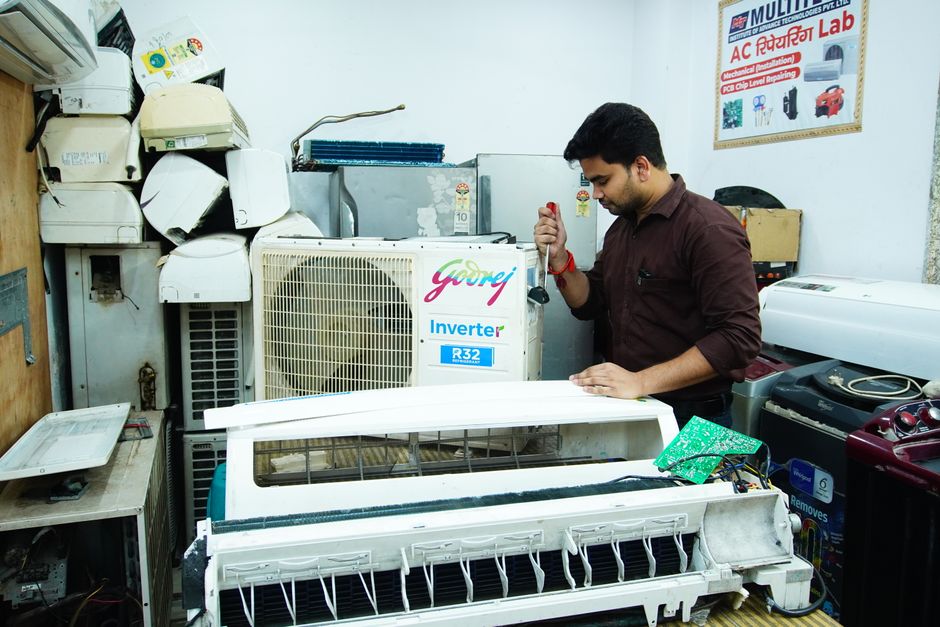
An HVAC technician career is one of the few paths where you can finish training in six months to two years, skip most student debt, and step into work that pays a median of $59,810 a year, according to the Bureau of Labor Statistics (May 2024). HVAC stands for heating, ventilation, and air conditioning, and the job is exactly what it sounds like: installing, maintaining, and repairing the systems that keep buildings livable.
- What an HVAC Technician Career Really Looks Like Day to Day
- Training Paths and What They Cost
- How to Pay for an HVAC Technician Career
- Certification and Licensing You Actually Need
- Real Pay in an HVAC Technician Career
- What Most People Get Wrong About an HVAC Technician Career
- Frequently Asked Questions
Here’s the short version of how an HVAC technician career starts. You get trained — either through a community college or trade school certificate program, or through a paid apprenticeship. You pass the federal EPA Section 608 exam so you can legally handle refrigerant. You check whether your state or city requires a separate license, because that part varies. Then you work as a helper or apprentice while your pay climbs with your skill.
This guide walks through each of those steps with real numbers and names the source for every figure. It also covers what an HVAC technician career actually pays at the low end, not just the headline median, so you can decide with clear eyes instead of a recruiter’s pitch.
What an HVAC Technician Career Really Looks Like Day to Day
The Bureau of Labor Statistics describes the work as installing, maintaining, and repairing heating, ventilation, cooling, and refrigeration systems. In practice that means service calls at homes and businesses, seasonal rushes when the first heat wave or cold snap hits, and diagnostic work — figuring out why a system is failing before you touch a wrench.
An HVAC technician career is physical. You’ll work in attics, crawlspaces, on roofs, and outdoors in weather. BLS notes that technicians may work irregular hours and overtime during peak heating and cooling seasons. That overtime is a real part of annual earnings for many techs, which is worth knowing before you compare an HVAC technician career to a salaried office job.
It is also a job that cannot be done remotely and cannot be shipped overseas. Someone has to physically be at the failing furnace. That’s a genuine structural advantage of an HVAC technician career compared to work that’s easier to automate or offshore.
Training Paths and What They Cost
BLS reports that HVAC technicians typically need a postsecondary nondegree award, though some enter the field with less education. Those programs generally run from six months to two years and lead to a certificate or an associate degree. Others train through an apprenticeship, which BLS says usually combines paid on-the-job training with classroom instruction and lasts three to five years.
Tuition varies enormously by school and state, so no honest guide can give you one number. A public community college certificate is usually the cheapest classroom route; a private for-profit trade school is often several times more. Before you sign anything, look the exact program up on College Scorecard and TrainingProviderResults.gov — the FTC specifically recommends both free tools for comparing cost, completion rates, and post-graduation employment.
| Path | Typical length | Who pays | Best fit if |
|---|---|---|---|
| Community college certificate | 6 months–1 year (BLS range) | You, often with Pell Grant help | You want the fastest classroom entry |
| Associate degree | About 2 years (BLS range) | You, often with Pell Grant help | You may want to move into supervision or estimating |
| Registered apprenticeship | 3–5 years (BLS) | Employer pays you a progressive wage | You want to avoid tuition debt entirely |
| Helper / on-the-job start | Varies by employer | Employer | You can get hired locally and learn while working |
How to Pay for an HVAC Technician Career
If your program is eligible, federal aid applies to an HVAC technician career the same way it applies to a four-year degree. Federal Student Aid set the maximum Pell Grant at $7,395 for the 2026–27 award year, with a minimum award of $740. Pell is a grant, not a loan — you don’t repay it if you stay enrolled and meet your school’s requirements.
Important caveat: not every certificate program is Title IV eligible, and eligibility rules — including satisfactory academic progress, disbursement timing, and how aid is applied to short programs — are set by each school within federal rules. Ask the financial aid office at the specific school about your specific program. Do not assume a rule you read about one college applies to yours.
The debt-free route into an HVAC technician career is a registered apprenticeship. Apprenticeship.gov describes the model as earning from your first day on the job, with wages rising as your skills do. The Department of Labor also reports that 93% of apprentices retain employment after completing a program. You can search open programs by ZIP code at apprenticeship.gov.
Certification and Licensing You Actually Need
One credential is federal and non-negotiable. Under EPA rules at 40 CFR Part 82, Subpart F, technicians who maintain, service, repair, or dispose of equipment that could release refrigerants must hold Section 608 Technician Certification. You earn it by passing an EPA-approved test through an EPA-approved certifying organization.
There are four certification categories, per EPA: Type I for small appliances, Type II for high-pressure equipment (most residential and light commercial AC), Type III for low-pressure systems like large chillers, and Universal, which covers all three. EPA also notes that apprentices are exempt from certification as long as they are closely and continually supervised by a certified technician.
Licensing is the part that varies. BLS states plainly that some states and localities require HVAC technicians to be licensed and tells you to check with your state and locality. Requirements, exam content, experience hours, and fees differ, and some places license at the city or county level. Search your state’s contractor or trades licensing board directly rather than trusting a school’s summary.
Real Pay in an HVAC Technician Career
The median annual wage for heating, air conditioning, and refrigeration mechanics and installers was $59,810 in May 2024, according to the Bureau of Labor Statistics. Median means half earned more and half earned less. BLS reports the lowest 10 percent earned less than $39,130 and the highest 10 percent earned more than $91,020.
🎓 Get Free Scholarship Alerts
Free · No spam · Unsubscribe anytime
Read that spread honestly. Starting pay in an HVAC technician career is usually near the bottom of that range, not the median. The median is what a technician with real experience and certifications earns. Getting to the top decile generally takes years, specialty skills like commercial refrigeration or controls, or moving into running your own service business.
On demand: BLS projects employment in this occupation to grow 8 percent from 2024 to 2034, much faster than the average for all occupations, with about 40,100 openings projected each year on average over the decade. Wages also vary a lot by metro area and industry, so check the BLS Occupational Employment and Wage Statistics data for your own state before you plan around a national figure.
What Most People Get Wrong About an HVAC Technician Career
The biggest mistake is treating the national median as a starting salary. It isn’t. Someone comparing an HVAC technician career to a bachelor’s degree using $59,810 as year-one pay is comparing the wrong numbers, and will be disappointed in month three.
The second mistake is believing placement promises. The FTC states directly that a school is not an employment agency and no school can guarantee you a job when you graduate. In 2025 the FTC sent more than $15.5 million in refunds to consumers affected by one training company’s deceptive job placement and employer partnership claims. Get any placement statistic in writing, then verify it independently on College Scorecard.
The third mistake is confusing EPA 608 certification with a state license. They are different things. Passing 608 satisfies a federal refrigerant rule; it does not authorize you to pull permits or contract in a state that licenses the trade. And the fourth: assuming an apprenticeship is a fallback. Registered apprenticeships in construction average 4.2 years per DOL data and can be competitive to enter.
Frequently Asked Questions
How long does it take to start an HVAC technician career?
BLS says typical postsecondary programs run six months to two years, while apprenticeships usually take three to five years but pay you throughout. An HVAC technician career can therefore begin within a year on the classroom route, though you’ll still be an entry-level tech at that point.
Do I need college to become an HVAC technician?
No four-year degree is required. BLS lists a postsecondary nondegree award as typical entry-level education, and some people enter with less. You do need EPA Section 608 certification to handle refrigerant legally, and possibly a state or local license.
Can I get financial aid for an HVAC program?
Possibly. The maximum Pell Grant is $7,395 for 2026–27 per Federal Student Aid, but eligibility depends on your FAFSA results and whether your specific program qualifies. Rules differ by school and program — confirm with that school’s financial aid office before enrolling.
Is an HVAC technician career worth it financially?
That depends on your training cost and local wages. BLS reports a $59,810 median and 8 percent projected growth through 2034, which is strong. But no one can promise you a specific salary or a job offer — compare your program’s real cost against verified wage data for your metro area.
Ready to find money for school?
Find Money Where You Live
Scholarship and grant programs change from state to state, and many of the biggest awards come from your own state’s aid programs. Pick your state to see the scholarships that apply where you live.
See Scholarships in All 50 States →
Sources & How to Verify
The facts on this page are drawn from official government and primary sources. Rules, figures, and program details change, so always confirm the current details with the official agency, your school’s financial aid office, or the program’s own published rules.
- Federal Student Aid: studentaid.gov — the official source for FAFSA, grants, work-study, and aid rules
- FTC Consumer Advice: consumer.ftc.gov — scholarship and financial aid scam guidance
- IRS: irs.gov — how scholarships and fellowships are treated for taxes
- Bureau of Labor Statistics: bls.gov/ooh — official wage and job-outlook data for every career
- Your school’s financial aid office: aid rules vary by school — for your specific situation, their answer is the one that counts
Content last reviewed August 2026. If you notice outdated information, please contact us.
Related Guides
- Scholarships by State (50-State Guide)
- More in This Category
- Scholarship Scam Checks
- College Survival Guide
- All Scholarship Resources
- Browse All Scholarships
Informational only — not legal, tax, financial, or academic advice. Spot Scholarships is an independent educational resource. Financial aid rules, scholarship terms, school policies, and licensing requirements vary by school, program, and state and change over time, so always verify the current details with your school’s financial aid office, the official agency, or the program’s published rules before acting. Nothing on this page guarantees admission, aid, or an award.