A diesel mechanic career is one of the few paths where you can finish training in under two years, start earning while you learn, and land in a job that paid a median of $60,640 a year as of May 2024, according to the U.S. Bureau of Labor Statistics. You do not need a four-year degree. Most employers want a high school diploma, hands-on training, and proof you can diagnose problems instead of just swapping parts.
- What a Diesel Mechanic Career Looks Like Day to Day
- Training Paths Into a Diesel Mechanic Career
- What a Diesel Mechanic Career Pays, According to BLS Data
- Job Demand: What the Outlook Numbers Really Mean
- Certifications and Licensing in a Diesel Mechanic Career
- Paying for Diesel Training Without Overborrowing
- What Most People Get Wrong About a Diesel Mechanic Career
- Frequently Asked Questions
Here is the honest version. The BLS Occupational Outlook Handbook projects employment of diesel service technicians and mechanics to grow about 2 percent from 2024 to 2034, which is slower than average for all occupations. But the same BLS data projects roughly 26,500 job openings each year over that decade, mostly from workers retiring or moving into other roles. Slow growth plus steady turnover still means real hiring.
This guide walks through what the work involves, how the training paths compare, what the pay data actually says, how certification and licensing work, and how to fund the schooling. Where a rule depends on your state or your school, this guide says so and tells you exactly who to ask instead of handing you a number that might not apply to you.
What a Diesel Mechanic Career Looks Like Day to Day
A diesel mechanic career means keeping heavy equipment running: semi-trucks, city buses, school buses, dump trucks, generators, farm and construction machinery, and marine engines. The BLS classifies this work under bus and truck mechanics and diesel engine specialists, SOC code 49-3031.
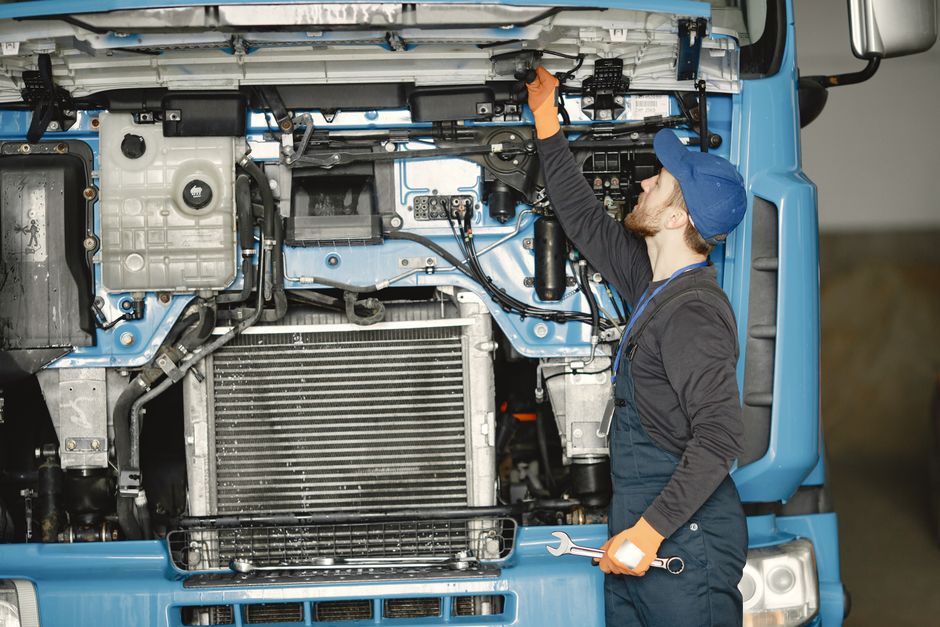
Most days mix diagnostics and repair. You plug a laptop into the engine control module, read fault codes, and decide whether the problem is a sensor, a wiring harness, a fuel injector, or the aftertreatment system. Then you do the physical work: brakes, transmissions, hydraulics, air systems, welding, and emissions components.
The BLS notes that most diesel technicians work full time and that overtime and evening or weekend shifts are common, since fleets often need repairs done outside business hours. Shops can be loud and cold in winter. The work is physical. Being honest about that matters more than any recruiting brochure.
Training Paths Into a Diesel Mechanic Career
There is no single door into a diesel mechanic career. The BLS reports that a high school diploma or equivalent is the typical entry-level education, and that technicians who start without postsecondary training are trained extensively on the job, beginning with basic tasks like checking fluids and cleaning parts.
Employers increasingly prefer applicants who completed a certificate or degree program. Community colleges and vocational-technical schools offer both. Per BLS, an associate degree in diesel technology generally takes about two years; certificate programs are typically shorter.
Registered apprenticeships are the third path. Under U.S. Department of Labor standards for registered apprenticeship, programs generally include at least 2,000 hours of on-the-job training per year plus at least 144 hours of related classroom instruction per year. Individual diesel apprenticeships vary in length and structure, so read the specific program’s standards.
| Path | Typical length | Do you earn while training? | Main tradeoff |
|---|---|---|---|
| On-the-job entry | Varies by employer | Yes, from day one | Slowest route to advanced diagnostic work |
| Certificate program | Under 2 years | No, unless you work part time | Tuition cost; check accreditation |
| Associate degree | About 2 years (BLS) | No | Longer and costlier than a certificate |
| Registered apprenticeship | Varies; often 2-4 years | Yes, wages rise with progress | Openings are limited and competitive |
What a Diesel Mechanic Career Pays, According to BLS Data
Pay in a diesel mechanic career is well documented, so you do not have to guess. The BLS reports a median annual wage of $60,640 for diesel service technicians and mechanics in May 2024. Median means half earned more and half earned less.
The spread matters more than the median. BLS data shows the lowest 10 percent earned less than $41,670 and the highest 10 percent earned more than $85,980 in May 2024. Where you land depends on your experience, your certifications, the industry you work in, and your metro area.
Wages differ sharply by state and city. The BLS Occupational Employment and Wage Statistics program publishes state and metro-area wage tables for SOC 49-3031 on bls.gov. Look up your own area there rather than trusting a national average or a school’s advertised salary claim. Some employers also pay tool allowances or certification bonuses; ask during interviews.
Job Demand: What the Outlook Numbers Really Mean
Two BLS numbers describe demand, and people usually quote only one. Projected employment growth for diesel service technicians is about 2 percent from 2024 to 2034, slower than average. That is the number pessimists cite.
The second number is openings. BLS projects about 26,500 openings per year on average over the decade, largely to replace workers who retire or change occupations. That replacement demand is why a diesel mechanic career can still be a reasonable bet even when growth is modest.
Demand is also uneven by sector. Freight, transit, construction, agriculture, and utilities all run diesel fleets, and they do not slow down at the same time. Broad skills and willingness to relocate widen your options. No one can promise you a job offer, but diagnostic skill and a clean work record improve your odds.
Certifications and Licensing in a Diesel Mechanic Career
The main credential in a diesel mechanic career is ASE certification. The National Institute for Automotive Service Excellence offers the Medium/Heavy Truck series, tests T1 through T8, covering areas like diesel engines, brakes, electrical systems, and preventive maintenance. Current ASE test pricing and experience rules are published on ase.com.
ASE’s published policy requires passing the test plus hands-on work experience, and relevant formal training can substitute for part of that experience requirement. Check ase.com for the exact current rule before you register, because the substitution terms are set by ASE and can change.
Licensing is where you must be careful. Requirements to work on vehicles, and any state-level registration or licensing, vary by state. Do not assume a rule you read online applies where you live. Check your state’s licensing board or department of motor vehicles directly.
🎓 Get Free Scholarship Alerts
Free · No spam · Unsubscribe anytime
A commercial driver’s license helps because you often need to road-test what you repaired. Under Federal Motor Carrier Safety Administration rules, you generally must be 21 to drive a commercial motor vehicle in interstate commerce, while 18-year-olds may drive intrastate. CDL testing and endorsement details are set by your state.
Paying for Diesel Training Without Overborrowing
Start with the FAFSA at studentaid.gov. Many certificate and associate programs at accredited schools qualify for federal aid, and filing costs nothing. According to Federal Student Aid, the maximum Federal Pell Grant for the 2025-26 award year is $7,395, and the minimum scheduled award is $740. Your actual award depends on your Student Aid Index, cost of attendance, and enrollment level.
Eligibility rules, disbursement timing, and satisfactory academic progress standards vary by school and by program, and short programs are treated differently than degree programs. Your school’s financial aid office is the only office that can tell you what applies to your specific enrollment, so contact them before you enroll or sign any loan paperwork.
Also check employer tuition assistance. Many fleets and dealerships help pay for training or tools in exchange for a work commitment. Read the repayment clause before signing. The Federal Trade Commission warns consumers to be skeptical of any school promising guaranteed job placement or specific salaries; verify claims independently at consumer.ftc.gov.
What Most People Get Wrong About a Diesel Mechanic Career
The biggest mistake is assuming a diesel mechanic career is only wrench work. Modern trucks are rolling computer networks with emissions controls, telematics, and multiple control modules. Technicians who read wiring diagrams and interpret electronic diagnostic reports advance fastest, which is exactly the skill set BLS describes programs as teaching.
The second mistake is ignoring tool costs. Many shops expect you to own a personal tool set, and building one takes years and real money. Ask specifically what the employer supplies before you accept an offer.
The third mistake is trusting advertised salary figures from schools instead of BLS wage tables for your own state. The fourth is treating a diesel mechanic career as a fallback for people who dislike school. Certification tests, service manuals, and diagnostic training are genuinely technical, and the people who commit to studying are the ones who reach the top of the BLS wage range.
Finally, some students skip the FAFSA because they assume trade programs do not qualify. Many accredited programs do. Ask the aid office instead of assuming.
Frequently Asked Questions
Is a diesel mechanic career worth it without a college degree?
It can be. BLS lists a high school diploma or equivalent as the typical entry-level education, with a May 2024 median wage of $60,640. A certificate, degree, or apprenticeship generally makes you more competitive, but no path guarantees a job offer.
How long does training take?
Per BLS, an associate degree in diesel technology typically takes about two years, and certificate programs are usually shorter. Registered apprenticeships vary and often run several years, since Labor Department standards require substantial on-the-job hours plus classroom instruction each year.
Do I need a license to work as a diesel mechanic?
It depends on where you live. Requirements vary by state, so contact your state licensing board or DMV. ASE certification is voluntary and issued by ASE, not by a state, but many employers strongly prefer or require it.
How much can experienced diesel technicians earn?
BLS reports the highest 10 percent of diesel service technicians earned more than $85,980 in May 2024, while the lowest 10 percent earned under $41,670. Pay varies widely by state, metro area, and industry, so check the BLS wage tables for your location.
Ready to find money for school?
Find Money Where You Live
Scholarship and grant programs change from state to state, and many of the biggest awards come from your own state’s aid programs. Pick your state to see the scholarships that apply where you live.
See Scholarships in All 50 States →
Sources & How to Verify
The facts on this page are drawn from official government and primary sources. Rules, figures, and program details change, so always confirm the current details with the official agency, your school’s financial aid office, or the program’s own published rules.
- Federal Student Aid: studentaid.gov — the official source for FAFSA, grants, work-study, and aid rules
- FTC Consumer Advice: consumer.ftc.gov — scholarship and financial aid scam guidance
- IRS: irs.gov — how scholarships and fellowships are treated for taxes
- Bureau of Labor Statistics: bls.gov/ooh — official wage and job-outlook data for every career
- Your school’s financial aid office: aid rules vary by school — for your specific situation, their answer is the one that counts
Content last reviewed August 2026. If you notice outdated information, please contact us.
Related Guides
- Scholarships by State (50-State Guide)
- More in This Category
- Scholarship Scam Checks
- College Survival Guide
- All Scholarship Resources
- Browse All Scholarships
Informational only — not legal, tax, financial, or academic advice. Spot Scholarships is an independent educational resource. Financial aid rules, scholarship terms, school policies, and licensing requirements vary by school, program, and state and change over time, so always verify the current details with your school’s financial aid office, the official agency, or the program’s published rules before acting. Nothing on this page guarantees admission, aid, or an award.