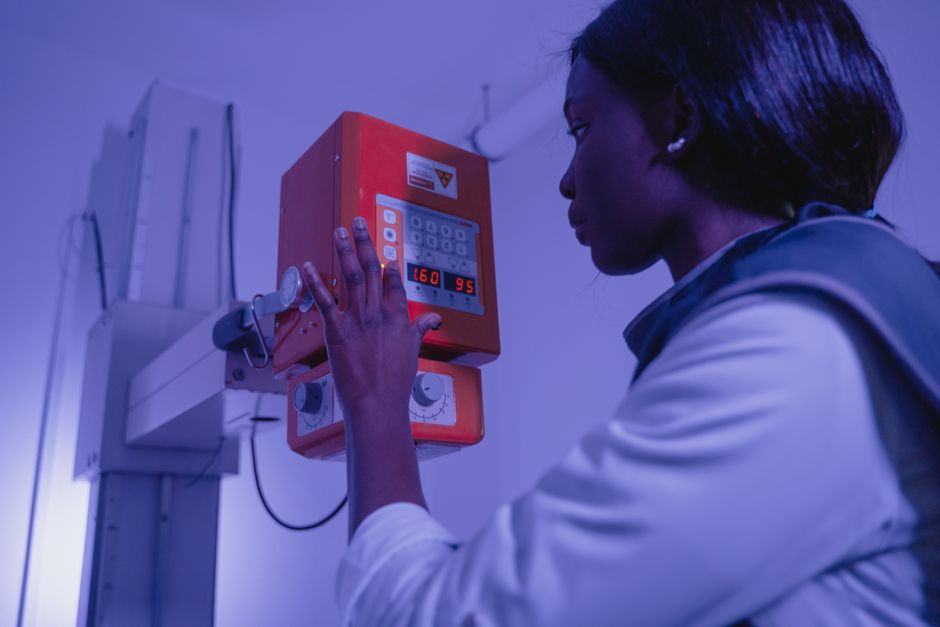
Becoming a radiologic technologist takes about two years of college and a certification exam — not the 13-plus years it takes to become a radiologist. That single distinction is the reason this article exists, because the two job titles sound almost identical and mean completely different things. A radiologist is a medical doctor who reads and interprets images to diagnose disease. A radiologic technologist is the healthcare professional who positions the patient, runs the equipment, and produces those images in the first place.
- Radiologic Technologist vs. Radiologist: The Real Difference
- What a Radiologic Technologist Actually Does All Day
- The Step-by-Step Path to Becoming a Radiologic Technologist
- Licensing Rules Vary by State — Here’s How to Check Yours
- Pay and Job Outlook for a Radiologic Technologist
- What Most People Get Wrong
- Paying for a Radiologic Technologist Program
- Frequently Asked Questions
If you are in high school or your first year of college and you want a real healthcare career without a decade of medical training and six figures of debt, this is one of the most direct paths available. The typical entry point is an associate’s degree from an accredited program, followed by a national certification exam and, in most states, a state license.
Below is the whole path, step by step: what the job actually involves, what the schooling looks like, what certification requires, how the licensing rules change depending on where you live, and what the U.S. Bureau of Labor Statistics reports for pay and job growth. No hype, no guarantees — just how the process works.
Radiologic Technologist vs. Radiologist: The Real Difference
The words look alike because they share a root, but the training gap is enormous. A radiologic technologist operates imaging equipment. A radiologist is a physician who went to medical school and completed a residency, then interprets what those images show and signs the diagnostic report.
Here is how the two paths compare side by side. Notice the education column especially — that is where nearly all of the difference lives.
| Factor | Radiologic Technologist | Radiologist |
| Typical entry education | Associate’s degree, per BLS | Bachelor’s + MD or DO |
| Years after high school | About 2 | About 13 or more |
| Post-degree training | Clinical hours inside the program | One-year internship plus a four-year diagnostic radiology residency |
| Main credential | ARRT certification, plus state license where required | American Board of Radiology certification |
| Core job | Produce the images | Interpret the images and diagnose |
| Median pay | $77,660 (BLS, May 2024) | Physicians and surgeons: at or above $239,200 (BLS, May 2024) |
Both roles matter and both work side by side every shift. But if someone tells you that you can “become a radiologist in two years,” they are describing the technologist path and using the wrong word for it. Get clear on which one you are actually signing up for before you enroll anywhere.
What a Radiologic Technologist Actually Does All Day
You work with patients constantly. A radiologic technologist explains the procedure, positions the body correctly, shields areas that should not be exposed, sets the machine’s exposure settings, captures the image, and checks that the result is clear enough for a physician to read. Bad positioning means a repeat exam and more radiation, so precision is the whole job.
Radiation safety is a permanent part of the work. You follow protocols to keep exposure as low as reasonably achievable for the patient and for yourself, and you wear a dosimeter that tracks your own dose. You are also often the person who calms a frightened kid or an elderly patient in pain.
Many technologists start in general radiography — plain X-rays — and later add specialties like computed tomography, mammography, MRI, or interventional radiology. Each specialty typically means additional documented clinical experience and another exam, which is how most people raise their pay over a career.
The Step-by-Step Path to Becoming a Radiologic Technologist
The route is unusually clear compared with most careers. Here is the standard sequence:
- Finish high school with real science. Take biology, anatomy, physics, and algebra if your school offers them. Programs are competitive and often weigh science grades.
- Find an accredited program. Most are two-year associate’s degree programs at community colleges. Confirm accreditation before you apply — this is the step that most affects whether you can sit for the certification exam.
- Complete the coursework and clinical rotations. You will spend real hours in a hospital or imaging center under supervision, not just in a classroom.
- Pass the ARRT certification exam. The American Registry of Radiologic Technologists sets three requirements: education, ethics, and examination. The radiography exam has 230 questions with 230 minutes of test time, according to ARRT-based reporting.
- Get your state credential if your state requires one. More on that below.
- Keep your certification current. ARRT requires 24 continuing education credits every two-year renewal period.
Accreditation deserves one more sentence, because it is where people get burned. The education requirement for the primary pathway is an associate’s degree or higher plus completion of an ARRT-approved educational program in the same discipline. A program that is not approved can leave you with a certificate you cannot use.
Licensing Rules Vary by State — Here’s How to Check Yours
This is the part no article can answer for you, and any site that quotes you one national licensing rule is oversimplifying. Licensing requirements for a radiologic technologist are set state by state, and they genuinely differ.
ARRT states plainly that more than 75% of states have licensing laws covering the practice of radiologic technology, and that ARRT certification by itself does not authorize you to practice in a state that requires its own separate credential. A handful of states do not license the profession at all. Most states that do license use ARRT exams or credentials somewhere in their process.
So before you enroll, do two things. Search for your state’s radiologic technology licensing board or radiation control program and read its actual requirements page. Then ask the program you are considering, in writing, whether its graduates qualify for licensure in the state where you plan to work. Fees, renewal cycles, and scope-of-practice limits all vary, so use the board’s published numbers rather than any figure you read secondhand.
Pay and Job Outlook for a Radiologic Technologist
The U.S. Bureau of Labor Statistics reported a median annual wage of $77,660 for radiologic technologists and technicians in May 2024. Median means half earned more and half earned less — your own pay will depend on your state, your specialty certifications, your shift, and your employer type.
🎓 Get Free Scholarship Alerts
Free · No spam · Unsubscribe anytime
On growth, BLS projects employment of radiologic and MRI technologists to grow 5 percent from 2024 to 2034, faster than the average for all occupations, with about 15,400 openings projected each year on average over the decade. Those openings come from growth plus workers leaving the field. Steady demand is not the same as a guaranteed job offer, but it is a healthier picture than many fields offer.
What Most People Get Wrong
Three mistakes come up over and over.
- Confusing the titles. People apply to “radiology programs” thinking they are on a physician track. Read the credential the program awards, not the marketing.
- Skipping the accreditation check. A cheap, fast program that is not ARRT-approved can leave you unable to sit for the exam. Verify accreditation directly with ARRT or the accrediting body, not from the school’s brochure.
- Assuming certification equals a license. National certification and a state license are two different things, and in most states you need both.
One more: some students assume the radiologic technologist path is a consolation prize for people who could not get into medical school. It is not. It is a separate profession with its own skills, its own certifications, and its own ladder into CT, MRI, and interventional work.
Paying for a Radiologic Technologist Program
Start with the FAFSA at studentaid.gov. For the 2026–27 award year, the U.S. Department of Education set the maximum Federal Pell Grant at $7,395 and the minimum at $740. What you actually receive depends on your Student Aid Index, your enrollment status, and your school’s cost of attendance.
Beyond Pell, community college programs are often among the cheapest routes into healthcare, and some hospitals offer tuition assistance in exchange for a work commitment. Aid rules — including satisfactory academic progress standards, disbursement timing, and what happens if you drop a class — vary by school and program. Ask your school’s financial aid office about your specific situation rather than relying on general guidance.
Frequently Asked Questions
How long does it take to become a radiologic technologist?
Most people finish an associate’s degree program in about two years, which BLS lists as the typical entry-level education, then take the ARRT exam. Program length varies, so confirm with the specific school.
Is a radiologic technologist the same as an X-ray tech?
Basically, yes — “X-ray tech” is the everyday name for the general radiography role. A radiologic technologist may also be certified in CT, MRI, or mammography, which broadens the work considerably.
Do I need a license in every state?
No. ARRT reports that more than 75% of states license the profession, but some do not. Check your state’s licensing board directly, because requirements and fees differ.
What does certification cost?
Reported figures put the ARRT primary radiography application fee around $225, plus roughly $200–$400 for the 24 continuing education credits required each two-year renewal. Confirm current amounts on ARRT’s own fees page before you budget.
Ready to find money for school?
Find Money Where You Live
Scholarship and grant programs change from state to state, and many of the biggest awards come from your own state’s aid programs. Pick your state to see the scholarships that apply where you live.
See Scholarships in All 50 States →
Sources & How to Verify
The facts on this page are drawn from official government and primary sources. Rules, figures, and program details change, so always confirm the current details with the official agency, your school’s financial aid office, or the program’s own published rules.
- Federal Student Aid: studentaid.gov — the official source for FAFSA, grants, work-study, and aid rules
- FTC Consumer Advice: consumer.ftc.gov — scholarship and financial aid scam guidance
- IRS: irs.gov — how scholarships and fellowships are treated for taxes
- Bureau of Labor Statistics: bls.gov/ooh — official wage and job-outlook data for every career
- Your school’s financial aid office: aid rules vary by school — for your specific situation, their answer is the one that counts
Content last reviewed August 2026. If you notice outdated information, please contact us.
Related Guides
- Scholarships by State (50-State Guide)
- More in This Category
- Scholarship Scam Checks
- College Survival Guide
- All Scholarship Resources
- Browse All Scholarships
Informational only — not legal, tax, financial, or academic advice. Spot Scholarships is an independent educational resource. Financial aid rules, scholarship terms, school policies, and licensing requirements vary by school, program, and state and change over time, so always verify the current details with your school’s financial aid office, the official agency, or the program’s published rules before acting. Nothing on this page guarantees admission, aid, or an award.