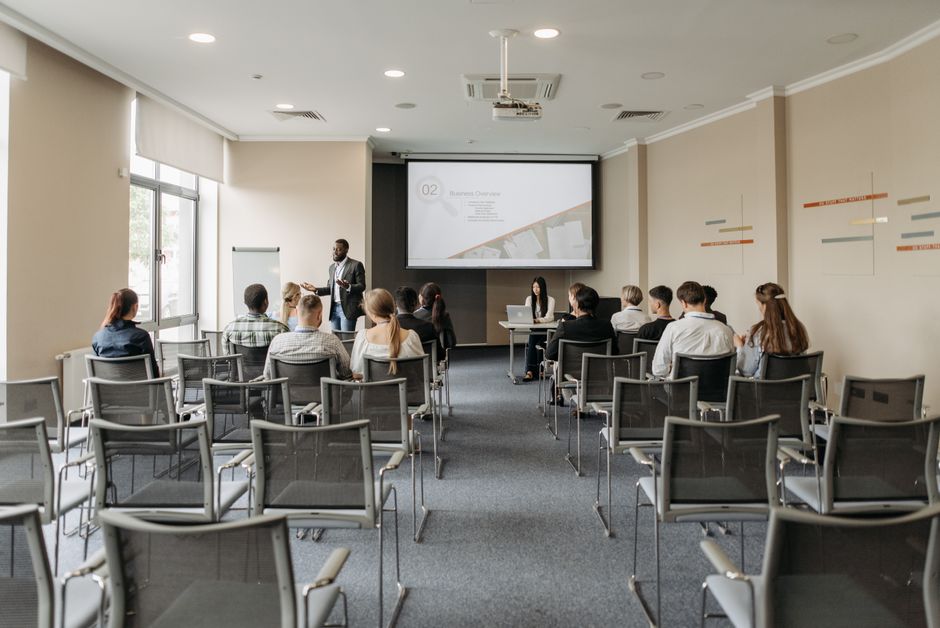
Scholarship seminar scams usually follow the same script: you get a mailed invitation or a text promising “free money for college,” you sit in a hotel ballroom for 90 minutes, and the free workshop turns into a sales pitch for a scholarship search service costing hundreds or thousands of dollars. According to the FTC, that is the core of the scheme — a seminar that exists to sell you a product, not to teach you about aid.
- How Scholarship Seminar Scams Actually Work, Step by Step
- The Red Flags That Give Scholarship Seminar Scams Away
- What You Are Being Sold Versus What Is Already Free
- Your Legal Protections If You Already Paid
- What Most People Get Wrong About Scholarship Seminar Scams
- How to Verify a Seminar Before You Ever Sit Down
- Frequently Asked Questions
The short answer: you do not need to buy anything at that seminar. Every federal grant, loan, and work-study dollar in the United States runs through the FAFSA at studentaid.gov, which is free. The searchable scholarship databases these companies resell are also free at your school’s financial aid office, your public library, and the Department of Labor’s scholarship finder. Nobody has a secret list.
That does not mean every workshop in a hotel is a scam. Some are run by community foundations, school districts, or nonprofit college access programs and are genuinely useful. The difference is simple and you can spot it in the first ten minutes: a real workshop teaches you how to file paperwork and leaves. Scholarship seminar scams collect payment before you walk out the door.
How Scholarship Seminar Scams Actually Work, Step by Step
The pipeline is remarkably consistent. Here is the sequence you should expect:
- The invitation. A postcard, email, or text arrives addressed to you or your parents, often using official-sounding language and a name that echoes a government agency or an “educational foundation.”
- The venue. A hotel conference room, an airport-adjacent meeting center, or a rented classroom. The temporary location matters legally — more on that below.
- The free content. Twenty to forty minutes of real, accurate information about how financial aid works. This builds trust, and none of it is secret.
- The turn. A pivot to fear: “Most families overpay for college by tens of thousands of dollars.” Then the offer — a matching service, an aid consultant, or a guaranteed scholarship package.
- The close. A discount that expires when you leave the room, a clipboard, and a card reader.
The FTC’s consumer guidance describes exactly this pattern: a free seminar that is really a sales pitch, followed by a request to pay in advance for scholarships you may never receive. That is the anatomy of most scholarship seminar scams.
What you get for the money is usually a printed or online list of awards you could have found yourself, plus a form letter. Some services will file your FAFSA for you — a service you can perform in under an hour, for free, on studentaid.gov.
The Red Flags That Give Scholarship Seminar Scams Away
The FTC publishes a short list of phrases that should stop you cold. If you hear any of these from a stage, treat the whole presentation as a sales event:
- “This scholarship is guaranteed, or your money back.”
- “You can’t get this information anywhere else.”
- “We’ll do all the work — you just pay a processing fee.”
- “You’ve been selected by a national foundation.”
- “May I have your credit card number to hold this scholarship?”
Add two more that show up specifically in ballroom pitches. First, the price is never printed on the invitation. Second, the discount dies at the door. Legitimate organizations do not price their services based on whether you leave the room. Scholarship seminar scams depend on you deciding before you can compare anything.
One more test that costs nothing: if the seminar is held in a college classroom or a school building, call that school’s financial aid office and ask whether the event is sponsored or approved. Renting a room is not an endorsement, and scholarship seminar scams borrow institutional credibility that way constantly.
What You Are Being Sold Versus What Is Already Free
Here is the comparison that ends most of these pitches. Every item on the right is genuinely free to every US student.
| What the seminar sells | Free equivalent | Where to get it |
|---|---|---|
| “FAFSA filing assistance” | The FAFSA itself, plus free help | studentaid.gov; your school’s financial aid office; 1-800-4-FED-AID |
| “Exclusive scholarship database” | Public scholarship search tools | CareerOneStop scholarship finder (US Dept. of Labor); your high school counselor; public library |
| “Guaranteed grant matching” | Federal Pell Grant eligibility | Determined by your FAFSA — max award $7,395 for 2025–26 and 2026–27 per Federal Student Aid’s Dear Colleague Letters GEN-25-02 and GEN-26-01 |
| “Aid appeal consulting” | Professional judgment review | Your school’s financial aid office (rules and forms vary by school) |
| “Insider award list” | Institutional aid listings | Each college’s own financial aid and admissions pages |
Note the last column carefully. Aid rules genuinely do vary by school and by state program — award amounts, appeal deadlines, and satisfactory academic progress standards are set institutionally. That variation is real, and it is exactly the confusion these pitches monetize. Ask your school’s financial aid office for your specific case rather than paying someone to guess.
Your Legal Protections If You Already Paid
If you signed and paid at a hotel, you may have a cancellation right many families never hear about. Under the FTC’s Cooling-Off Rule (16 CFR Part 429), sales made at a location the seller rents temporarily — hotel rooms, convention centers, rented meeting halls — generally carry a three-day right to cancel when the purchase is $130 or more. For sales at your home, workplace, or dorm, the threshold is $25 or more.
The FTC also requires the seller to tell you about that right at the time of sale and to hand you two copies of a cancellation form plus a copy of your contract. If nobody did, that itself is worth reporting. Send your cancellation in writing, keep a copy, and note the date.
Congress also addressed scholarship seminar scams directly. The College Scholarship Fraud Prevention Act of 2000 (Public Law 106-420) directed the US Sentencing Commission to enhance federal penalties for fraud connected to scholarships, grants, and financial aid, and requires the FTC, DOJ, and Department of Education to report annually to Congress on this fraud.
The scale is documented. In FTC testimony on Project ScholarScam, the agency reported that companies in its cases took roughly $22 million from about 175,000 consumers. That is the historical footprint scholarship seminar scams left behind, and it is why the reporting infrastructure exists at reportfraud.ftc.gov.
What Most People Get Wrong About Scholarship Seminar Scams
The biggest misconception is that these events target careless people. They do not. They target organized, anxious families — parents who show up early, take notes, and want to do everything right. Conscientiousness is the vulnerability being priced.
🎓 Get Free Scholarship Alerts
Free · No spam · Unsubscribe anytime
The second mistake is assuming a fee automatically means fraud. It does not. Independent educational consultants and CPAs legitimately charge for college planning. The distinction is disclosure and pressure: a real professional gives you a written scope, a printed rate, and time to think. Scholarship seminar scams collapse that timeline on purpose.
The third error is believing the “unclaimed scholarship money” statistic that opens most of these presentations. Sums like “$6 billion goes unclaimed every year” circulate widely, and most versions trace back to employer tuition benefits nobody applied for — not to open awards sitting unclaimed for high schoolers. Treat any unsourced figure from a stage as marketing.
Finally, people assume that walking out is rude. It is not. You owe a sales presentation nothing, and leaving during the pitch is the single most effective defense against scholarship seminar scams that exists.
How to Verify a Seminar Before You Ever Sit Down
Do these four things before the event, not after:
- Search the exact organization name plus “complaint” and “FTC.” Check the Better Business Bureau profile too, including how complaints were resolved.
- Call your school. Ask your high school counselor or your college’s financial aid office whether they know the organization.
- Ask what it costs, in writing, before you attend. A refusal to answer is your answer.
- Decide your rule in advance. “I am not paying anything tonight” is a complete sentence and it neutralizes the entire close.
If something already went wrong, report it to the FTC at reportfraud.ftc.gov and to your state attorney general’s consumer protection division. State remedies vary — some states have their own seminar and door-to-door sales laws with different cancellation windows — so check your state AG’s site rather than assuming the federal three-day window is the only one you have.
None of this guarantees you a specific award, and be skeptical of anyone who says otherwise. What it does is keep your money where it belongs while you file the free forms that actually determine your aid.
Frequently Asked Questions
Are all scholarship seminar scams illegal?
Not every high-pressure seminar breaks the law, and calling a specific company fraudulent is a legal judgment for regulators and courts. What is clearly illegal is misrepresenting your ability to obtain aid, and the FTC has brought enforcement actions on exactly that basis. Report what you experienced and let the agency evaluate it.
I paid $900 at a hotel seminar. Can I get it back?
Possibly. The FTC’s Cooling-Off Rule generally gives you three business days to cancel purchases of $130 or more made at a temporary location like a rented hotel room. Cancel in writing immediately, keep proof, and dispute the charge with your card issuer if the seller refuses.
Is there ever a legitimate reason to pay for scholarship help?
Yes — some independent consultants and financial planners do honest work for a disclosed hourly or flat fee. The line is transparency and time. If you cannot get the price in writing before you commit, or you cannot leave and think about it, you are looking at a sales event.
Does paying for a service improve my chances of winning an award?
There is no evidence it does, and no service can promise an outcome. Awards are decided by the sponsoring organizations against their own criteria. What reliably improves your odds is filing the FAFSA early, applying to more awards you genuinely qualify for, and asking your school’s financial aid office about institutional funds specific to your program.
Ready to find money for school?
Find Money Where You Live
Scholarship and grant programs change from state to state, and many of the biggest awards come from your own state’s aid programs. Pick your state to see the scholarships that apply where you live.
See Scholarships in All 50 States →
Sources & How to Verify
The facts on this page are drawn from official government and primary sources. Rules, figures, and program details change, so always confirm the current details with the official agency, your school’s financial aid office, or the program’s own published rules.
- Federal Student Aid: studentaid.gov — the official source for FAFSA, grants, work-study, and aid rules
- FTC Consumer Advice: consumer.ftc.gov — scholarship and financial aid scam guidance
- IRS: irs.gov — how scholarships and fellowships are treated for taxes
- Bureau of Labor Statistics: bls.gov/ooh — official wage and job-outlook data for every career
- Your school’s financial aid office: aid rules vary by school — for your specific situation, their answer is the one that counts
Content last reviewed August 2026. If you notice outdated information, please contact us.
Related Guides
- Scholarships by State (50-State Guide)
- More in This Category
- Scholarship Scam Checks
- College Survival Guide
- All Scholarship Resources
- Browse All Scholarships
Informational only — not legal, tax, financial, or academic advice. Spot Scholarships is an independent educational resource. Financial aid rules, scholarship terms, school policies, and licensing requirements vary by school, program, and state and change over time, so always verify the current details with your school’s financial aid office, the official agency, or the program’s published rules before acting. Nothing on this page guarantees admission, aid, or an award.