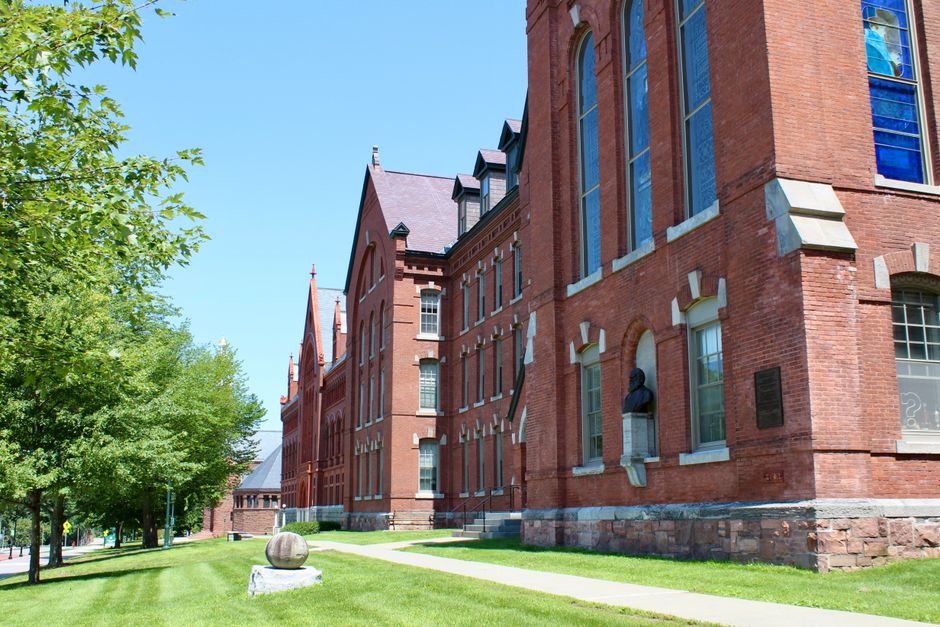
Vermont Colleges come in more shapes than the rankings sites let on: 10 degree-granting colleges, of which 1 are open admission (no one is turned away) and 9 more do not require test scores. The lowest real net price in the state is Community College of Vermont at about $13,696 a year – net price, not the sticker. Every number on this page is federal College Scorecard data – not marketing, not a paid ranking.
Vermont Colleges at a Glance
- Degree-granting colleges: 10 (of 11 Scorecard institutions incl. trade schools)
- Open admission (everyone gets in): 1
- Test scores not required: 9 more
- Public community colleges: 1
- Four-year colleges: 8
On this page
What Paying for Vermont Colleges Actually Looks Like
If you’re starting to look at vermont colleges, the first thing worth knowing is how small the whole landscape is. Vermont has 11 operating colleges in total. That is a short list by any measure, and it changes how the search feels. Instead of narrowing down from hundreds of options, you can realistically learn something real about every single one — read their sites, look at their own published numbers, and visit the ones that stay interesting. A small list is not a limitation here. It just means the work in front of you is finite.
Cost is usually the part families want answered first, and it is also the part where general numbers mislead the most. Among vermont colleges, the lowest average net price belongs to the Community College of Vermont, at about $13,696 per year. Net price is an average of what students actually paid after grants and scholarships, not a sticker price and not a quote for your family. Your own number depends on your family’s finances, and the only way to find it is to run each college’s net price calculator and, eventually, compare real aid offers side by side. Treat the average as a starting point for conversation, not a prediction.
Admission works differently across this group too, and the differences matter for how you plan. One of the vermont colleges is open admission, meaning no applicant is turned away. Vermont also has one public community college. Nine of the state’s colleges do not require test scores, which for many students removes a real source of stress and expense, though some still choose to send scores when they think it helps. Policies get revised, sometimes year to year, so confirm what’s required on each college’s own admissions page before you build your timeline around it.
Size and setting are worth thinking about honestly rather than aspirationally. The University of Vermont is the largest four-year college in the state, and a big campus offers things a small one cannot — more majors, more research, more people to find your people among. A smaller campus offers something different: professors who know your name, easier access to opportunities, less risk of getting lost. Neither is the better choice in the abstract. It depends on how a particular student learns and what kind of place they’d actually show up for on a hard Tuesday in February.
A reasonable way through this is to visit a few, ask blunt questions about cost and graduation and job placement, and write down what you hear. Nobody can promise you admission anywhere, and nobody can promise what aid you’ll receive — including us. What we can say is that vermont colleges make for an unusually manageable search, and that the numbers that should drive your decision are the ones each college publishes about itself and the ones that show up on your own financial aid letters. Give those more weight than anything else you read, this page included.
Vermont Colleges With Open Admission
Open admission means exactly what it sounds like: meet the basic requirements (usually a diploma or GED) and you are in. No essays sweated over, no rejection letter. These vermont colleges are where the “will I get in anywhere?” worry ends – and several lead to the same careers as far more selective schools.
| College | City | Type | Avg net price/yr | Grad rate |
| Community College of Vermont | Montpelier | Public 2-year | $13,696 | 19% |
Test-Optional Vermont Colleges
These schools do not require SAT or ACT scores. That does not make them easy – grades and coursework still matter – but a bad test day will not close the door. Combined with the open-admission list above, most vermont colleges are reachable without a test score.
| College | City | Admission rate | Avg net price/yr |
| University of Vermont | Burlington | 65% | $19,343 |
| Vermont State University | Randolph | 82% | $18,212 |
| Champlain College | Burlington | 83% | $35,860 |
| Middlebury College | Middlebury | 11% | $31,483 |
| Norwich University | Northfield | 74% | $22,257 |
| Saint Michael’s College | Colchester | 85% | $25,239 |
| Bennington College | Bennington | 45% | $30,947 |
| Landmark College | Putney | 49% | $56,954 |
| Sterling College | Craftsbury Common | 67% | $21,854 |
What about trade and certificate schools? Vermont also has 1 open-admission institutions that award certificates rather than degrees – welding, cosmetology, medical assisting, HVAC and similar. Many are excellent and lead straight to licensed work; many are for-profit, and outcomes vary widely between them. They are kept out of the college tables on this page so the comparison stays apples-to-apples, and covered properly in our trade school guides, where the pay data comes from the Bureau of Labor Statistics.
The Cheapest Vermont Colleges by Real Net Price
Sticker price is a fiction most families never pay. Net price is what students actually paid on average after grants and scholarships – the honest number, straight from the federal data. These are the ten lowest degree-granting colleges in Vermont. For-profit certificate academies often post lower prices than anything here, but they award certificates rather than degrees, so they are covered separately below rather than mixed into this comparison:
🎓 Get Free Scholarship Alerts
Free · No spam · Unsubscribe anytime
| College | City | Type | Avg net price/yr | Grad rate | Median earnings (10 yr) |
| Community College of Vermont | Montpelier | Public 2-year | $13,696 | 19% | $36,234 |
| Vermont State University | Randolph | Public 4-year | $18,212 | 58% | $50,331 |
| University of Vermont | Burlington | Public 4-year | $19,343 | 77% | $62,472 |
| Norwich University | Northfield | Nonprofit 4-year | $22,257 | 61% | $65,575 |
| Saint Michael’s College | Colchester | Nonprofit 4-year | $25,239 | 77% | $61,317 |
| Bennington College | Bennington | Nonprofit 4-year | $30,947 | 65% | $38,289 |
| Middlebury College | Middlebury | Nonprofit 4-year | $31,483 | 93% | $76,310 |
| Champlain College | Burlington | Nonprofit 4-year | $35,860 | 59% | $58,386 |
| Landmark College | Putney | Nonprofit 2-year | $56,954 | 42% | $29,813 |
Pair any of these with the awards on our Vermont scholarships page and the real cost drops again.
Community Colleges in Vermont
Two years at a community college and a transfer is the cheapest path through the vermont colleges system for most families – same bachelor’s degree at the end, a fraction of the debt. Vermont has 1 public community and technical colleges:
| College | City | Avg net price/yr |
| Community College of Vermont | Montpelier | $13,696 |
Vermont Colleges Compared: The Four-Year Table
Every four-year college, largest first, with the five numbers that matter: how hard it is to get in, the SAT middle band (25th to 75th percentile of admitted students – below the low number does not mean rejected), the real net price, how many finish, and what graduates earn ten years after starting.
| College | Admit rate | SAT mid-50% | Net price/yr | Grad rate | Earnings (10 yr) |
| University of Vermont | 65% | 1290–1440 | $19,343 | 77% | $62,472 |
| Vermont State University | 82% | n/a | $18,212 | 58% | $50,331 |
| Champlain College | 83% | 1220–1380 | $35,860 | 59% | $58,386 |
| Middlebury College | 11% | 1445–1550 | $31,483 | 93% | $76,310 |
| Norwich University | 74% | 1060–1320 | $22,257 | 61% | $65,575 |
| Saint Michael’s College | 85% | 1120–1280 | $25,239 | 77% | $61,317 |
| Bennington College | 45% | 1291–1403 | $30,947 | 65% | $38,289 |
| Sterling College | 67% | n/a | $21,854 | 50% | $30,573 |
What Each of the Vermont Colleges Is Strongest In
The federal data shows what share of each college’s degrees come from each field – so instead of a marketing brochure, here is where each school actually concentrates. A college is listed when at least a quarter of its degrees come from one field:
| College | Focus | Concentration |
| Bennington College | Arts-focused | 46% of degrees |
| Champlain College | Computing-focused | 46% of degrees |
| Vermont State University | Health-focused | 45% of degrees |
Common Questions
Which vermont colleges accept everyone?
1 colleges in Vermont are open admission – the first table on this page lists them. A diploma or GED is typically the only academic requirement.
What is the cheapest college in Vermont?
By average net price – what students actually paid – it is Community College of Vermont at about $13,696 per year in the current federal data. State grants and outside scholarships can push your own cost below that; see the Vermont scholarships page.
Do vermont colleges require the SAT or ACT?
Not all of them. 9 schools beyond the open-admission list do not require scores. Policies change year to year, so confirm on the college’s own admissions page before you skip the test.
The fastest way to use this vermont colleges guide is backwards: pick the net price your family can live with first, then see which schools fit it.
Ready to cut the price of any college on this page?
Sources & How to Verify
Every figure above comes from the U.S. Department of Education College Scorecard (retrieved August 2026; the Scorecard updates annually and this page is regenerated with each release). Prices are averages – your own net price depends on your family income. Verify any college directly:
- College Scorecard: collegescorecard.ed.gov — look up any school’s current numbers
- Federal Student Aid: studentaid.gov — FAFSA, grants, and aid rules
- The college’s own net price calculator: every school is required to publish one — it is the closest thing to your real number
Related Guides
- Vermont Scholarships (the sibling page)
- Scholarships by State (50-State Guide)
- College Decisions
- College Survival Guide
- Browse All Scholarships
Informational only — not admissions, legal, tax, or financial advice. Spot Scholarships is an independent educational resource. All figures are federal College Scorecard data and change with each annual release; admission policies, prices, and test requirements can change sooner, so always confirm current details with the college itself. Nothing on this page guarantees admission, aid, or an award.
You May Also Like
More state college guides
- Utah Colleges 2026: Costs, Admissions, and the Honest Numbers
- Texas Colleges 2026: Costs, Admissions, and the Honest Numbers
- Tennessee Colleges 2026: Costs, Admissions, and the Honest Numbers