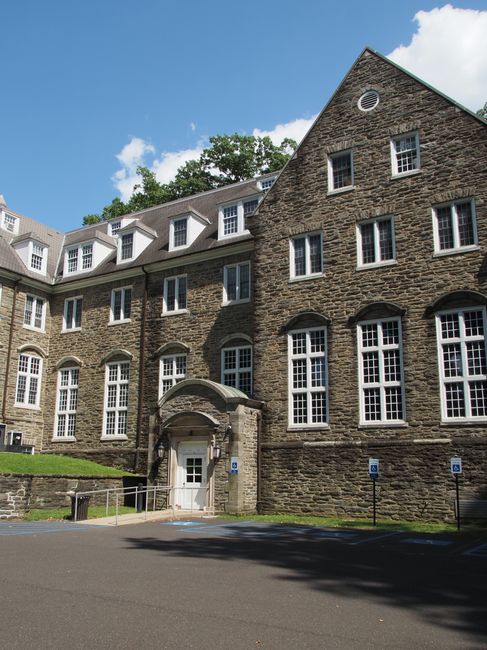
Pennsylvania Colleges come in more shapes than the rankings sites let on: 146 degree-granting colleges, of which 24 are open admission (no one is turned away) and 121 more do not require test scores. The lowest real net price in the state is Williamson College of the Trades at about $1,545 a year – net price, not the sticker. Every number on this page is federal College Scorecard data – not marketing, not a paid ranking.
Pennsylvania Colleges at a Glance
- Degree-granting colleges: 146 (of 282 Scorecard institutions incl. trade schools)
- Open admission (everyone gets in): 24
- Test scores not required: 121 more
- Public community colleges: 46
- Four-year colleges: 116
On this page
What Paying for Pennsylvania Colleges Actually Looks Like
If you’re starting to look at pennsylvania colleges, the first thing worth knowing is how many there are. Pennsylvania has 282 operating colleges, which is a lot of doors for one state. That number can feel overwhelming, but it also means you are not choosing between a small handful of options where one rejection closes the whole path. Most families end up seriously considering only a few schools, and that’s normal. The point of a list this long isn’t to research all of it — it’s that there’s very likely something on it that fits your student.
Some of those doors are wide open. Among pennsylvania colleges, 24 are open-admission, meaning they don’t turn applicants away. If your student’s grades weren’t what anyone hoped, or if school just didn’t go well for reasons that had nothing to do with ability, open-admission schools are a real starting point rather than a consolation prize. Alongside those, 46 public community colleges spread across the state offer a lower-cost first two years, often with the option to transfer credits later. Whether credits transfer where your student wants them to go is something to confirm directly with both schools, in writing, before enrolling — transfer agreements vary and they change.
Testing is less of a gatekeeper than it used to be. At 121 pennsylvania colleges, test scores are not required to apply. That doesn’t mean scores never help — at some schools a strong score can still support an application or a scholarship — but a disappointing SAT or ACT no longer quietly removes a student from most of the map. If your student tests poorly but works hard and writes well, there are plenty of places where the rest of the application carries the weight.
Cost is where the honest conversation has to happen, and where sticker prices mislead almost everyone. The figure that matters is net price — what a family actually pays after grants and scholarships, not the number on the website. Across pennsylvania colleges, the lowest average net price belongs to Williamson College of the Trades, at about $1,545 per year. That’s an average, not a quote, and it reflects one specific school with its own admissions requirements and its own trades-focused program. Every other school’s net price will be different, and your family’s will be different from the average even at the same school. Run each college’s own net price calculator with your real financial numbers, and treat the aid offer letter as the only figure you can plan around.
A few other things are worth saying plainly. Pennsylvania State University-Main Campus is the largest four-year college in the state, and size cuts both ways — more programs, more people, and less individual attention than a small campus. No one, including this page, can tell you where your student will be admitted or what aid they’ll receive. What we can do is show you the shape of the landscape so you know what to ask. Call the admissions and financial aid offices, ask what a typical student like yours actually pays, ask what percentage of students finish, and write the answers down. The colleges’ own numbers, applied to your own situation, are what should drive the decision.
Pennsylvania Colleges With Open Admission
Open admission means exactly what it sounds like: meet the basic requirements (usually a diploma or GED) and you are in. No essays sweated over, no rejection letter. These pennsylvania colleges are where the “will I get in anywhere?” worry ends – and several lead to the same careers as far more selective schools.
| College | City | Type | Avg net price/yr | Grad rate |
| Community College of Philadelphia | Philadelphia | Public 2-year | $11,911 | 18% |
| Community College of Allegheny County | Pittsburgh | Public 2-year | $13,970 | 25% |
| Harrisburg Area Community College | Harrisburg | Public 2-year | $14,471 | 21% |
| Northampton County Area Community College | Bethlehem | Public 2-year | $12,119 | 30% |
| Montgomery County Community College | Blue Bell | Public 2-year | $11,124 | 25% |
| Delaware County Community College | Media | Public 2-year | $6,576 | 18% |
| Bucks County Community College | Newtown | Public 2-year | $6,389 | 22% |
| Pennsylvania College of Technology | Williamsport | Public 2-year | $25,110 | 61% |
| Lehigh Carbon Community College | Schnecksville | Public 2-year | $9,203 | 25% |
| Reading Area Community College | Reading | Public 2-year | $9,228 | 21% |
| Luzerne County Community College | Nanticoke | Public 2-year | $9,433 | 24% |
| Westmoreland County Community College | Youngwood | Public 2-year | $5,167 | 26% |
| Lackawanna College | Scranton | Nonprofit 2-year | $19,951 | 38% |
| Butler County Community College | Butler | Public 2-year | $6,233 | 30% |
| Community College of Beaver County | Monaca | Public 2-year | $6,937 | 28% |
9 more open-admission colleges omitted for length – the Scorecard link at the bottom lists every one.
Test-Optional Pennsylvania Colleges
These schools do not require SAT or ACT scores. That does not make them easy – grades and coursework still matter – but a bad test day will not close the door. Combined with the open-admission list above, most pennsylvania colleges are reachable without a test score.
| College | City | Admission rate | Avg net price/yr |
| Pennsylvania State University-Main Campus | University Park | 61% | $32,875 |
| Temple University | Philadelphia | 80% | $28,198 |
| University of Pittsburgh-Pittsburgh Campus | Pittsburgh | 58% | $30,434 |
| West Chester University of Pennsylvania | West Chester | 78% | $23,331 |
| Drexel University | Philadelphia | 79% | $38,509 |
| University of Pennsylvania | Philadelphia | 5% | $28,699 |
| Commonwealth University of Pennsylvania | Bloomsburg | 93% | $15,699 |
| Pennsylvania State University-World Campus | University Park | 91% | $19,550 |
| Pennsylvania Western University | California | 94% | $18,256 |
| Carnegie Mellon University | Pittsburgh | 12% | $31,944 |
| Villanova University | Villanova | 27% | $43,756 |
| Slippery Rock University of Pennsylvania | Slippery Rock | 71% | $19,608 |
| Indiana University of Pennsylvania | Indiana | 91% | $16,804 |
| Kutztown University of Pennsylvania | Kutztown | 91% | $21,331 |
| Lehigh University | Bethlehem | 26% | $36,931 |
106 more listed in the full table below.
What about trade and certificate schools? Pennsylvania also has 97 open-admission institutions that award certificates rather than degrees – welding, cosmetology, medical assisting, HVAC and similar. Many are excellent and lead straight to licensed work; many are for-profit, and outcomes vary widely between them. They are kept out of the college tables on this page so the comparison stays apples-to-apples, and covered properly in our trade school guides, where the pay data comes from the Bureau of Labor Statistics.
The Cheapest Pennsylvania Colleges by Real Net Price
Sticker price is a fiction most families never pay. Net price is what students actually paid on average after grants and scholarships – the honest number, straight from the federal data. These are the ten lowest degree-granting colleges in Pennsylvania. For-profit certificate academies often post lower prices than anything here, but they award certificates rather than degrees, so they are covered separately below rather than mixed into this comparison:
| College | City | Type | Avg net price/yr | Grad rate | Median earnings (10 yr) |
| Williamson College of the Trades | Media | Nonprofit 2-year | $1,545 | 76% | n/a |
| Westmoreland County Community College | Youngwood | Public 2-year | $5,167 | 26% | $37,439 |
| Pennsylvania Highlands Community College | Johnstown | Public 2-year | $6,200 | 39% | $38,752 |
| Butler County Community College | Butler | Public 2-year | $6,233 | 30% | $38,891 |
| Bucks County Community College | Newtown | Public 2-year | $6,389 | 22% | $47,324 |
| Delaware County Community College | Media | Public 2-year | $6,576 | 18% | $45,391 |
| Community College of Beaver County | Monaca | Public 2-year | $6,937 | 28% | $45,090 |
| Lehigh Carbon Community College | Schnecksville | Public 2-year | $9,203 | 25% | $42,436 |
| Reading Area Community College | Reading | Public 2-year | $9,228 | 21% | $39,082 |
| Luzerne County Community College | Nanticoke | Public 2-year | $9,433 | 24% | $40,437 |
Pair any of these with the awards on our Pennsylvania scholarships page and the real cost drops again.
Community Colleges in Pennsylvania
Two years at a community college and a transfer is the cheapest path through the pennsylvania colleges system for most families – same bachelor’s degree at the end, a fraction of the debt. Pennsylvania has 46 public community and technical colleges:
| College | City | Avg net price/yr |
| Community College of Philadelphia | Philadelphia | $11,911 |
| Community College of Allegheny County | Pittsburgh | $13,970 |
| Harrisburg Area Community College | Harrisburg | $14,471 |
| Northampton County Area Community College | Bethlehem | $12,119 |
| Montgomery County Community College | Blue Bell | $11,124 |
| Delaware County Community College | Media | $6,576 |
| Bucks County Community College | Newtown | $6,389 |
| Pennsylvania College of Technology | Williamsport | $25,110 |
| Lehigh Carbon Community College | Schnecksville | $9,203 |
| Reading Area Community College | Reading | $9,228 |
| Luzerne County Community College | Nanticoke | $9,433 |
| Westmoreland County Community College | Youngwood | $5,167 |
| Butler County Community College | Butler | $6,233 |
| Thaddeus Stevens College of Technology | Lancaster | $14,104 |
| Community College of Beaver County | Monaca | $6,937 |
31 more not shown.
Pennsylvania Colleges Compared: The Four-Year Table
Every four-year college, largest first, with the five numbers that matter: how hard it is to get in, the SAT middle band (25th to 75th percentile of admitted students – below the low number does not mean rejected), the real net price, how many finish, and what graduates earn ten years after starting.
| College | Admit rate | SAT mid-50% | Net price/yr | Grad rate | Earnings (10 yr) |
| Pennsylvania State University-Main Campus | 61% | 1240–1420 | $32,875 | 86% | $63,435 |
| Temple University | 80% | n/a | $28,198 | 76% | $63,727 |
| University of Pittsburgh-Pittsburgh Campus | 58% | 1280–1460 | $30,434 | 82% | $66,125 |
| West Chester University of Pennsylvania | 78% | 1100–1270 | $23,331 | 73% | $61,258 |
| Drexel University | 79% | 1240–1440 | $38,509 | 74% | $84,648 |
| University of Pennsylvania | 5% | 1510–1570 | $28,699 | 97% | $111,371 |
| Commonwealth University of Pennsylvania | 93% | 990–1190 | $15,699 | 56% | $52,416 |
| Pennsylvania State University-World Campus | 91% | 1090–1335 | $19,550 | 39% | $63,435 |
| Pennsylvania Western University | 94% | 940–1140 | $18,256 | 54% | $47,295 |
| Carnegie Mellon University | 12% | 1500–1570 | $31,944 | 90% | $114,862 |
| Villanova University | 27% | 1395–1510 | $43,756 | 89% | $100,423 |
| Slippery Rock University of Pennsylvania | 71% | 980–1190 | $19,608 | 68% | $53,032 |
| Indiana University of Pennsylvania | 91% | 970–1180 | $16,804 | 56% | $51,019 |
| Kutztown University of Pennsylvania | 91% | 1120–1310 | $21,331 | 58% | $53,775 |
| Lehigh University | 26% | 1370–1500 | $36,931 | 90% | $105,584 |
| Millersville University of Pennsylvania | 86% | 1020–1210 | $20,787 | 57% | $55,246 |
| Duquesne University | 84% | 1180–1340 | $37,730 | 79% | $74,742 |
| Saint Joseph’s University – Philadelphia | 89% | 1170–1350 | $29,689 | 78% | $86,881 |
| East Stroudsburg University of Pennsylvania | 92% | 1000–1180 | $18,134 | 52% | $56,148 |
| Shippensburg University of Pennsylvania | 86% | n/a | $23,726 | 56% | $56,351 |
| Pennsylvania State University-Penn State Harrisburg | 98% | 1120–1310 | $23,330 | 40% | $63,435 |
| Bucknell University | 29% | 1310–1470 | $40,766 | 88% | $93,807 |
| Thomas Jefferson University | 81% | 1160–1330 | $28,928 | 73% | $77,449 |
| University of Scranton | 81% | 1160–1318 | $32,568 | 78% | $74,652 |
| York College of Pennsylvania | 74% | 1020–1270 | $18,556 | 64% | $61,012 |
| Pennsylvania State University-Penn State Erie-Behrend College | 97% | 1120–1310 | $24,558 | 47% | $63,435 |
| Widener University | 71% | 1080–1290 | $25,759 | 66% | $70,920 |
| Robert Morris University | 90% | n/a | $23,003 | 62% | $62,105 |
| Pennsylvania State University-Penn State Abington | 97% | 1070–1265 | $18,071 | 38% | $63,435 |
| Lafayette College | 31% | 1350–1500 | $34,433 | 89% | $91,410 |
| Holy Family University | 71% | 910–1150 | $13,143 | 66% | $62,235 |
| Eastern University | 91% | n/a | $26,662 | 58% | $51,655 |
| Pennsylvania State University-Penn State Altoona | 98% | 1070–1290 | $22,213 | 17% | $63,435 |
| Gannon University | 74% | n/a | $22,553 | 67% | $58,845 |
| Point Park University | 97% | n/a | $25,942 | 58% | $45,856 |
81 smaller four-year colleges omitted for length; the Scorecard link below covers all of them.
🎓 Get Free Scholarship Alerts
Free · No spam · Unsubscribe anytime
What Each of the Pennsylvania Colleges Is Strongest In
The federal data shows what share of each college’s degrees come from each field – so instead of a marketing brochure, here is where each school actually concentrates. A college is listed when at least a quarter of its degrees come from one field:
| College | Focus | Concentration |
| Saint Joseph’s University – Lancaster | Health-focused | 100% of degrees |
| Moore College of Art and Design | Arts-focused | 98% of degrees |
| Thomas Jefferson University | Health-focused | 67% of degrees |
| Mount Aloysius College | Health-focused | 66% of degrees |
| Gwynedd Mercy University | Health-focused | 61% of degrees |
| Holy Family University | Health-focused | 56% of degrees |
| Alvernia University | Health-focused | 54% of degrees |
| Community College of Beaver County | Health-focused | 53% of degrees |
| Misericordia University | Health-focused | 53% of degrees |
| Carlow University | Health-focused | 50% of degrees |
| Pennsylvania State University-Penn State Mont Alto | Health-focused | 50% of degrees |
| Harcum College | Health-focused | 46% of degrees |
| Robert Morris University | Business-focused | 45% of degrees |
| Pennsylvania State University-Penn State Lehigh Valley | Business-focused | 44% of degrees |
| Duquesne University | Health-focused | 40% of degrees |
Common Questions
Which pennsylvania colleges accept everyone?
24 colleges in Pennsylvania are open admission – the first table on this page lists them. A diploma or GED is typically the only academic requirement.
What is the cheapest college in Pennsylvania?
By average net price – what students actually paid – it is Williamson College of the Trades at about $1,545 per year in the current federal data. State grants and outside scholarships can push your own cost below that; see the Pennsylvania scholarships page.
Do pennsylvania colleges require the SAT or ACT?
Not all of them. 121 schools beyond the open-admission list do not require scores. Policies change year to year, so confirm on the college’s own admissions page before you skip the test.
The fastest way to use this pennsylvania colleges guide is backwards: pick the net price your family can live with first, then see which schools fit it.
Bookmark this page – the pennsylvania colleges data refreshes with every annual federal release, so the numbers stay honest instead of aging quietly.
When you compare pennsylvania colleges, weigh the graduation rate as hard as the price: a cheap school you never finish is the most expensive kind.
Most families overestimate what pennsylvania colleges cost, because sticker prices make headlines and net prices do not.
No table can rank pennsylvania colleges for you – the right one depends on your major, your commute, and your budget, and only you know those.
Guidance counselors can pull the same federal numbers behind this pennsylvania colleges page, so bring it to your next meeting and ask what they would add.
Out-of-state readers can compare pennsylvania colleges against their own state’s page – the same six tables exist for all fifty states.
Print the shortlist you build from these pennsylvania colleges tables and take it on campus visits; the numbers make better questions than any brochure.
If a school you expected is missing from these pennsylvania colleges tables, it may be too small for the row caps here – the Scorecard link below has every institution.
Treat this pennsylvania colleges page as the starting map, not the finish line: the college’s own net price calculator is always the final word on your cost.
Ready to cut the price of any college on this page?
Sources & How to Verify
Every figure above comes from the U.S. Department of Education College Scorecard (retrieved August 2026; the Scorecard updates annually and this page is regenerated with each release). Prices are averages – your own net price depends on your family income. Verify any college directly:
- College Scorecard: collegescorecard.ed.gov — look up any school’s current numbers
- Federal Student Aid: studentaid.gov — FAFSA, grants, and aid rules
- The college’s own net price calculator: every school is required to publish one — it is the closest thing to your real number
Related Guides
- Pennsylvania Scholarships (the sibling page)
- Scholarships by State (50-State Guide)
- College Decisions
- College Survival Guide
- Browse All Scholarships
Informational only — not admissions, legal, tax, or financial advice. Spot Scholarships is an independent educational resource. All figures are federal College Scorecard data and change with each annual release; admission policies, prices, and test requirements can change sooner, so always confirm current details with the college itself. Nothing on this page guarantees admission, aid, or an award.
You May Also Like
More state college guides
- Oregon Colleges 2026: Costs, Admissions, and the Honest Numbers
- Oklahoma Colleges 2026: Costs, Admissions, and the Honest Numbers
- North Dakota Colleges 2026: Costs, Admissions, and the Honest Numbers