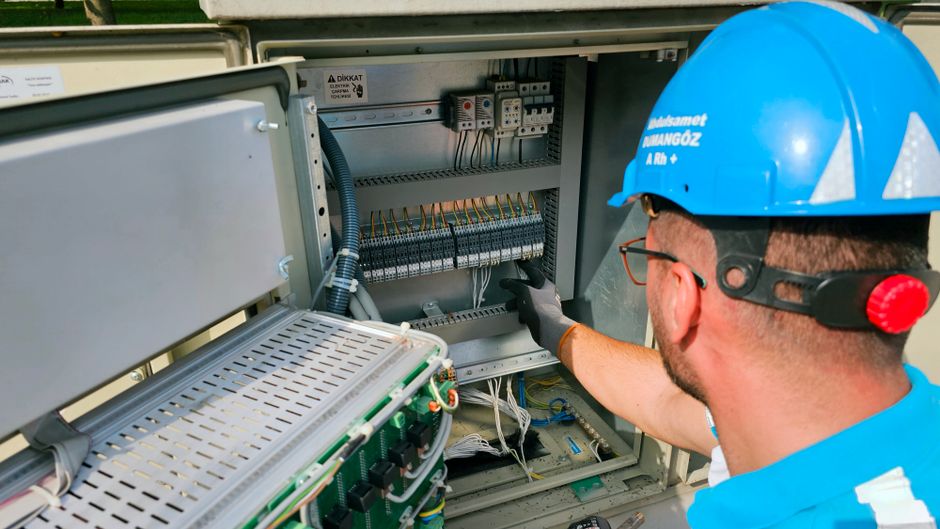
Wondering how to become an electrician? The short answer: you finish high school or earn a GED, get accepted into a registered apprenticeship (or a trade school program that feeds into one), work roughly four to five years as a paid apprentice while taking classroom instruction, then sit for your state or local journeyman exam. You get paid the entire time, and in most cases you do not pay tuition for the apprenticeship itself.
- How to Become an Electrician: The Five Steps
- What You Need Before You Apply
- The Apprenticeship Is the Heart of How to Become an Electrician
- Trade School vs. Apprenticeship: Comparing Your Options
- What Electricians Actually Earn
- Licensing Rules Vary by State — Here’s How to Check
- What Most People Get Wrong About How to Become an Electrician
- Frequently Asked Questions
That last part is why so many students ask how to become an electrician instead of taking on loans for a four-year degree. A registered apprenticeship is an actual job with a paycheck from week one, and the classroom hours are usually covered by the employer, the union, or the program sponsor. You earn while you learn rather than borrowing against a future salary.
The tradeoff is that getting in is competitive, the hours are long, and the licensing rules are genuinely different depending on where you live. This guide walks through how to become an electrician step by step: entry requirements, apprenticeship structure, real pay data from the Bureau of Labor Statistics, how to check your state’s rules, and the mistakes that cost people a year.
How to Become an Electrician: The Five Steps
The path is more standardized than most careers, but each step has real requirements you need to meet in order.
- Finish high school or earn a GED. Nearly every registered program requires it.
- Take algebra seriously. Electrical math is the screening filter.
- Apply to a registered apprenticeship through a local JATC, an independent contractor association, or an employer.
- Complete the required on-the-job and classroom hours while working for pay.
- Pass your journeyman exam with whatever agency licenses electricians where you work.
Every step in how to become an electrician is documented publicly. Registered programs are listed in the U.S. Department of Labor’s apprenticeship finder at apprenticeship.gov, so you can search real openings near you rather than guessing.
What You Need Before You Apply
Entry requirements vary by program, but union NECA/IBEW training centers publish a consistent baseline: you must be at least 18, hold a high school diploma or GED, and show one year of high school algebra with passing grades. Many locals specifically note that GED algebra does not satisfy that requirement, though most offer an approved tech math course as a substitute.
Most programs also require an aptitude test covering reading comprehension and algebra, followed by an interview that determines your ranking on the hiring list. A valid driver’s license and the ability to pass a drug screen are common. Because each local sets its own details, confirm requirements with the specific program before you apply.
One more practical note on how to become an electrician: many locals only accept applications during set windows each year. Missing the window means waiting.
The Apprenticeship Is the Heart of How to Become an Electrician
A registered apprenticeship combines paid on-the-job training with related classroom instruction, usually evening classes a couple nights a week. Journeyman licensing in most states requires roughly 8,000 hours of supervised work experience, which is about four years of full-time employment.
Program lengths differ. Union NECA/IBEW inside wireman programs commonly run five years with about 10,000 hours of on-the-job training plus roughly 900 classroom hours, while Independent Electrical Contractors chapters often run four years at 8,000 hours plus a smaller classroom requirement. Ask any program for its published hour totals in writing before committing.
Apprentice pay typically starts around 40% to 50% of the local journeyman rate and steps up on a published schedule, often every six months or every 1,000 hours. That raise schedule is part of the registered standards, so ask to see it.
Trade School vs. Apprenticeship: Comparing Your Options
Trade school is not a replacement for an apprenticeship. It is a head start. Classroom-only training does not produce licensable field hours, so you will still need supervised work experience afterward. Some states let approved schooling count toward a portion of required hours, but that credit is state-specific.
| Path | Typical length | You pay tuition? | Paid from day one? |
| Union JATC apprenticeship | About 5 years | Usually no (books/fees possible) | Yes |
| Non-union registered apprenticeship | About 4 years | Often employer-sponsored | Yes |
| Trade school, then apprenticeship | 6–24 months, then apprenticeship | Yes | Not during school |
If you do choose a school, federal aid may help. According to the U.S. Department of Education, the maximum Federal Pell Grant for the 2026–27 award year is $7,395 and the minimum is $740. Pell eligibility for shorter workforce programs has been expanding, but implementation details are still being finalized — verify at studentaid.gov and with the school’s financial aid office.
Financial aid rules genuinely differ by school and program, including satisfactory academic progress standards and how funds disburse. No article can tell you your award. Your school’s financial aid office is the only office that can confirm your specific case.
What Electricians Actually Earn
The Bureau of Labor Statistics reports that the median annual wage for electricians was $62,350 in May 2024, meaning half earned more and half earned less. BLS also reports the lowest 10% earned less than $39,430, while the highest 10% earned more than $106,030.
On outlook, BLS projects employment of electricians to grow 9% from 2024 to 2034 — much faster than the average for all occupations — with about 81,000 openings projected each year over the decade, mostly from workers retiring or changing fields.
Pay varies sharply by state, metro area, specialty, and union status. BLS publishes state and metro wage tables through its Occupational Employment and Wage Statistics program, so look up your own area rather than assuming the national median applies to you. Overtime and shift differentials can move real earnings well above base rates.
Licensing Rules Vary by State — Here’s How to Check
There is no national electrician license. Most states license journeyman and master electricians at the state level, several leave it to cities and counties, and a handful do not issue a statewide license at all. New York, for example, licenses through local jurisdictions rather than a single state credential, and Illinois requirements differ by city and county.
🎓 Get Free Scholarship Alerts
Free · No spam · Unsubscribe anytime
Because of that, any part of how to become an electrician that involves licensing has to be verified locally. Search for your state’s electrical licensing board, contractor board, or department of labor and read the journeyman requirements directly. Do not rely on a third-party site’s summary — fees, hour counts, and exam rules change.
Exams generally test the National Electrical Code plus state or local amendments. Your apprenticeship classroom work is built around that code, which is part of why the classroom hours matter.
What Most People Get Wrong About How to Become an Electrician
Thinking trade school alone makes you an electrician. It does not. Field hours under a licensed electrician are what qualify you to test.
Skipping algebra. This is the single most common reason applications stall. Bends, load calculations, and the aptitude test all lean on it.
Applying to only one program. Lists are competitive and windows are short. Apply to every registered program within driving distance.
Assuming a national rule exists. Anyone who tells you how to become an electrician without asking what state you live in is guessing about licensing.
Underestimating the timeline. Hours accrue only when there’s work. A “four-year” program can run longer in a slow construction market, which is normal, not a failure.
Frequently Asked Questions
How long does it take to learn how to become an electrician and get licensed?
Plan on four to five years of apprenticeship. Most states require roughly 8,000 hours of supervised experience before you can sit for the journeyman exam, and some programs require more. Confirm the exact hour count with your state licensing board.
Do I need a college degree?
No. BLS lists a high school diploma or equivalent as the typical entry-level education for electricians, with apprenticeship as the typical training path. A degree is optional, not required.
Do apprentices really get paid?
Yes. In a registered apprenticeship you are an employee earning wages from the start, typically beginning near half of the local journeyman rate with scheduled increases. Ask each program for its published wage progression before you accept.
Can financial aid help if I go to trade school first?
Possibly, if the school and program participate in federal aid. The maximum Pell Grant for 2026–27 is $7,395 per the Department of Education, but eligibility depends on your FAFSA results and the program. Your financial aid office can confirm what applies to you.
Ready to find money for school?
Find Money Where You Live
Scholarship and grant programs change from state to state, and many of the biggest awards come from your own state’s aid programs. Pick your state to see the scholarships that apply where you live.
See Scholarships in All 50 States →
Sources & How to Verify
The facts on this page are drawn from official government and primary sources. Rules, figures, and program details change, so always confirm the current details with the official agency, your school’s financial aid office, or the program’s own published rules.
- Federal Student Aid: studentaid.gov — the official source for FAFSA, grants, work-study, and aid rules
- FTC Consumer Advice: consumer.ftc.gov — scholarship and financial aid scam guidance
- IRS: irs.gov — how scholarships and fellowships are treated for taxes
- Bureau of Labor Statistics: bls.gov/ooh — official wage and job-outlook data for every career
- Your school’s financial aid office: aid rules vary by school — for your specific situation, their answer is the one that counts
Content last reviewed August 2026. If you notice outdated information, please contact us.
You May Also Like
Related Guides
- Scholarships by State (50-State Guide)
- More in This Category
- Scholarship Scam Checks
- College Survival Guide
- All Scholarship Resources
- Browse All Scholarships
Informational only — not legal, tax, financial, or academic advice. Spot Scholarships is an independent educational resource. Financial aid rules, scholarship terms, school policies, and licensing requirements vary by school, program, and state and change over time, so always verify the current details with your school’s financial aid office, the official agency, or the program’s published rules before acting. Nothing on this page guarantees admission, aid, or an award.