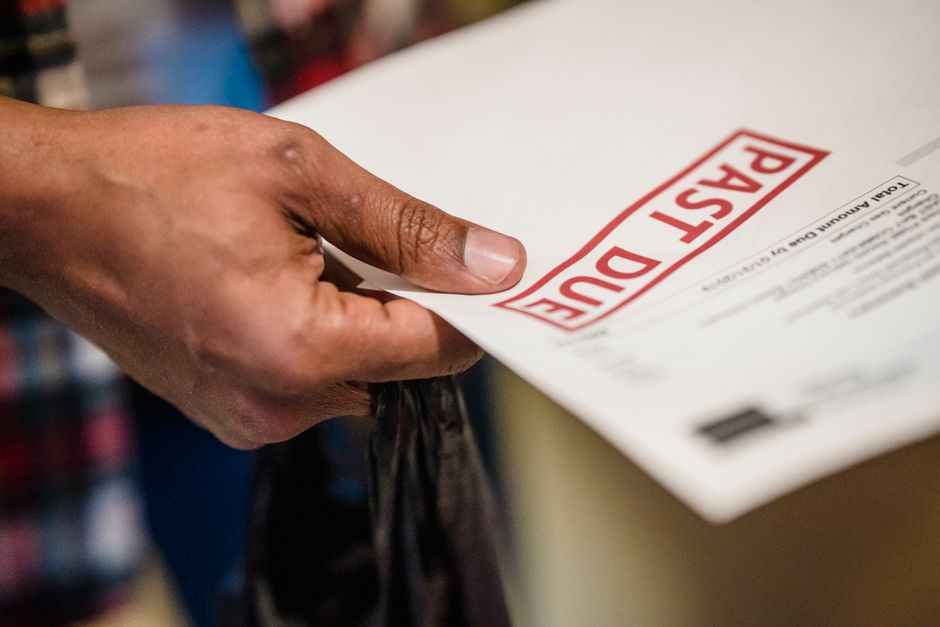
Owing your college money means your school’s business office is showing an unpaid balance on your student account, and until you deal with it the school can place a hold that blocks registration, housing, or your diploma. It is a debt to the college itself, not usually a federal student loan, and that difference changes almost everything about your options.
- What Owing Your College Money Actually Means
- Step One: The Hold on Your Account
- Transcripts and the 2024 Federal Rule
- When Owing Your College Money Becomes a Federal Overpayment
- When Owing Your College Money Turns Into Collections
- Your Options When You’re Owing Your College Money
- What Most People Get Wrong About Owing Your College Money
- Frequently Asked Questions
Here is the short answer. Owing your college money is a fixable problem in most cases, and the fastest path is almost always the same three steps: get an itemized statement of the balance, ask the bursar or student accounts office what payment plan options exist, and check with financial aid whether an award, appeal, or correction could reduce the amount.
Ignoring it is the one choice that reliably makes it worse, because unpaid campus balances can be sent to a collection agency and reported to credit bureaus.
This guide walks through what actually happens step by step: the holds, the deadlines, what the federal transcript rule changed in 2024, when the debt leaves campus, and what your realistic options are. Rules for balances, payment plans, and hold policies vary a lot by school, so treat this as a map — your own financial aid and bursar offices have the authoritative version for your case.
What Owing Your College Money Actually Means
Not all campus debt is the same, and the type determines who can collect and how. A tuition balance you never paid is a straightforward institutional debt. A federal grant overpayment is a debt to the U.S. Department of Education that your school is required to report. A defaulted federal loan is a third category entirely, handled outside your campus.
Knowing which one applies is the first real step, because the deadlines and consequences differ sharply. Ask your student accounts office to tell you in writing which category your balance falls into before you agree to any payment arrangement.
| Type of debt | Who you owe | Typical consequence | Where to ask |
| Unpaid tuition, fees, housing, dining | The college | Registration/diploma hold; possible collections | Bursar or student accounts |
| Title IV grant overpayment (e.g., Pell after withdrawal) | U.S. Dept. of Education, collected first by the school | Loss of future federal aid eligibility if unresolved | Financial aid office |
| Library fines, parking, lab fees | The college department | Small holds; usually easy to clear | The issuing department |
| Defaulted federal student loan | Federal government / servicer | Offsets and garnishment when collections are active | studentaid.gov |
Step One: The Hold on Your Account
The first thing most students notice is a hold. You go to register for next term and the portal blocks you. Schools use holds because they are effective, and the threshold that triggers one varies widely — some schools place a hold over any unpaid cent, others only above a set dollar amount. There is no national standard here, so check your school’s published student accounts policy.
Holds are usually reversible the moment the balance is paid or a payment plan is signed. Many schools will lift a registration hold once you enroll in an installment plan, even before the balance is cleared. That is worth asking about directly, because it is rarely advertised.
Transcripts and the 2024 Federal Rule
This is the part that changed recently and that most students have not heard about. Under U.S. Department of Education regulations effective July 1, 2024, a school participating in federal aid programs may not withhold a transcript for any academic term the student paid for using federal financial aid — including federal loans, Pell Grants, or work-study.
The rule also limits schools to withholding only the portion of the transcript covering terms with an unpaid balance, rather than your entire academic record. And per the same regulations, a school cannot take negative action when the unpaid balance resulted from the institution’s own error.
If your school is refusing a transcript for a federally-funded term, say so in writing and cite the 2024 rule. Some states have gone further with their own transcript laws, and those vary — check your state attorney general’s or higher education agency’s website rather than assuming.
When Owing Your College Money Becomes a Federal Overpayment
Withdrawing mid-term is the most common way students end up owing your college money without expecting to. Under the federal Return of Title IV Funds rules, if you withdraw before earning all your aid for the term, the school must return part of it — and you can be left with a balance the aid no longer covers.
According to the Federal Student Aid Handbook, you generally have 45 calendar days from the school’s notification to either repay a grant overpayment in full or set up a repayment schedule the school accepts. If neither happens in that window, the overpayment is reported to the National Student Loan Data System and referred to the Department’s Default Resolution Group.
The Handbook also sets a de minimis floor: a student is generally not liable for an overpayment under $25 unless it is a remaining balance or the result of the $300 campus-based overaward tolerance. Federal Student Aid guidance is clear that your school’s own refund policy is separate from the R2T4 calculation, so you may still owe institutional charges regardless.
When Owing Your College Money Turns Into Collections
If a campus balance stays unpaid long enough, many schools refer it to a third-party collection agency. Once that happens, federal consumer protections kick in. According to the FTC, a debt collector must send you a written validation notice — generally within five days of first contacting you — listing the creditor, the amount claimed, and your rights.
You then have 30 days from receiving that notice to dispute the debt in writing. Under FTC guidance, once the collector receives your dispute, it must stop collection efforts until it sends you written verification. Failing to dispute is not an admission that you owe the money, but it does let the collector treat the debt as valid.
Credit reporting matters too. Per the FTC, most accurate negative information can stay on your credit report for seven years, and a collection account can be reported for seven years plus 180 days from the original delinquency. Paying it does not reset or erase that clock — but a paid or settled notation still looks better to future lenders than an open collection.
🎓 Get Free Scholarship Alerts
Free · No spam · Unsubscribe anytime
For defaulted federal loans specifically, involuntary collection tools include Treasury offset of tax refunds and administrative wage garnishment of up to 15% of disposable pay. Note that the Department of Education announced a delay on involuntary collections in January 2026 while it implements new repayment rules, so the current status can change — verify at studentaid.gov before assuming either way.
Your Options When You’re Owing Your College Money
You have more moves than most students realize. Work through them in this order, because each one can shrink the number before you commit to paying it.
- Get the itemized bill. Ask for a line-by-line statement. Billing errors, duplicate fees, and charges for dropped courses are common and correctable.
- Check for unapplied aid. Ask financial aid whether any award, scholarship, or tuition waiver was never posted to your account. An incomplete FAFSA or a missing verification document is a frequent cause.
- Ask about a payment plan. Most schools offer installment plans, often with a modest enrollment fee. Terms vary by school — ask what happens to your hold once you enroll.
- Ask about emergency or completion grants. Many schools keep small funds for students close to graduating with a balance. These are rarely publicized.
- File an appeal if circumstances changed. Job loss, illness, a death in the family, or a documented hardship can support a professional judgment review or a SAP appeal. Appeals are reviewed case by case and are never guaranteed.
- Get it in writing. Whatever you agree to, ask for written confirmation of the balance, the schedule, and what the school will do about the hold.
If a state grant or promise program is involved, the repayment and appeal rules vary by state and program. Check your state’s higher education agency and your school’s financial aid office rather than relying on general advice.
What Most People Get Wrong About Owing Your College Money
The biggest misconception is that owing your college money is the same thing as defaulting on a student loan. It is not. A campus balance is a debt to the institution; a defaulted loan is a federal debt with its own consequences. Mixing them up leads students to either panic unnecessarily or ignore a real deadline.
The second mistake is assuming your entire transcript is locked. Since July 2024, that is often not permitted for aid-covered terms. Students walk away from finishing a degree over a hold that federal rules may not even allow.
The third is believing the balance will quietly disappear. It usually does not — it ages, gets referred out, and picks up collection activity. The fourth is waiting to call because you cannot pay the full amount. Schools generally have more flexibility before a debt leaves campus than after, so calling while owing your college money is still an internal balance gives you the most room to negotiate.
Finally, many students never ask whether an error caused the balance. Under the 2024 federal rules, a school cannot take negative action when the unpaid balance is the institution’s own mistake — but nobody will catch that mistake unless you ask.
Frequently Asked Questions
Can my school refuse to give me my diploma for owing your college money?
Diploma and degree-conferral holds are governed by school policy and state law, and they vary. The 2024 federal rule specifically addresses transcripts, not diplomas. Ask your registrar for the written policy and check whether your state has its own restriction.
Will an unpaid campus balance hurt my credit score?
Not while it sits with the school. If it is referred to a collection agency and reported, the FTC says a collection account can appear on your credit report for seven years plus 180 days from the original delinquency.
How long do I have to repay a federal grant overpayment?
The Federal Student Aid Handbook gives students 45 calendar days from notification to repay in full or set up a repayment schedule the school accepts. After that, the debt is reported to NSLDS and referred to the Department’s Default Resolution Group.
Can I still get federal aid with an unresolved overpayment?
An unresolved Title IV overpayment reported to NSLDS generally makes you ineligible for further federal aid until you repay it or enter a satisfactory repayment arrangement. Your financial aid office can confirm your specific status and what would restore eligibility.
Ready to find money for school?
Find Money Where You Live
Scholarship and grant programs change from state to state, and many of the biggest awards come from your own state’s aid programs. Pick your state to see the scholarships that apply where you live.
See Scholarships in All 50 States →
Sources & How to Verify
The facts on this page are drawn from official government and primary sources. Rules, figures, and program details change, so always confirm the current details with the official agency, your school’s financial aid office, or the program’s own published rules.
- Federal Student Aid: studentaid.gov — the official source for FAFSA, grants, work-study, and aid rules
- FTC Consumer Advice: consumer.ftc.gov — scholarship and financial aid scam guidance
- IRS: irs.gov — how scholarships and fellowships are treated for taxes
- Bureau of Labor Statistics: bls.gov/ooh — official wage and job-outlook data for every career
- Your school’s financial aid office: aid rules vary by school — for your specific situation, their answer is the one that counts
Content last reviewed August 2026. If you notice outdated information, please contact us.
Related Guides
- Scholarships by State (50-State Guide)
- More in This Category
- Scholarship Scam Checks
- College Survival Guide
- All Scholarship Resources
- Browse All Scholarships
Informational only — not legal, tax, financial, or academic advice. Spot Scholarships is an independent educational resource. Financial aid rules, scholarship terms, school policies, and licensing requirements vary by school, program, and state and change over time, so always verify the current details with your school’s financial aid office, the official agency, or the program’s published rules before acting. Nothing on this page guarantees admission, aid, or an award.